Clockwork, steam, mains current, 20 volts, AC with an overvoltage pulse, DC for Z gauge and finally digital central units with Wi-Fi: this page shows, gauge by gauge, the technology that powered and controlled Märklin trains over the decades. The dates come from the Märklin catalogs and price lists in our archive.
The gauges at a glance
Märklin used to measure gauges from the middle of one rail to the middle of the other. That is why the 1927 catalog still gives 35 mm for 0 gauge and 48 mm for gauge I. Today gauge is measured between the inside edges of the rails, hence the values 32 mm and 45 mm.
| Gauge | Track width | Scale | At Märklin | Power |
|---|---|---|---|---|
| 2 and 3 gauges | wider than 1 gauge | no fixed scale | from the early 1890s, no longer in the 1927 catalog | clockwork, steam, electric |
| Gauge I / 1 | 45 mm (formerly “48 mm”) | 1:32 since 1969 | 1891 to the end of the 1930s, again from 1969 | formerly clockwork, steam, 20 V; from 1969 two-rail AC, later also DC and digital |
| 0 gauge | 32 mm (formerly “35 mm”) | 1:45 today | 1890s to the mid-1950s | clockwork, steam, 20 V; clockwork only in the final years |
| 00 gauge, H0 from the 1950s | 16.5 mm | 1:87 | since 1935 | AC with center rail, also digital since 1985; HAMO as the DC exception |
| Z gauge (mini-club) | 6.5 mm | 1:220 | since 1972 | DC, analog |
| N gauge (Minitrix) | 9 mm | 1:160 | part of the group since 1997 (Trix) | DC, analog and digital |
| G gauge (LGB) | 45 mm | about 1:22.5 | part of the group since 2007 | DC, analog and digital |
The beginnings: from clockwork to the 20-volt system
- 1891Clockwork
The first Märklin train is wound up
At the Leipzig Spring Fair of 1891 Märklin showed a train with clockwork drive that ran on a figure-eight track layout. The spring motor in the locomotive was wound up with a key; better models had a brake, a reversing lever for forward and reverse, and some had two speeds. In the early 1890s there were also the large 2 and 3 gauges alongside 1 gauge; the smaller 0 gauge followed a little later.
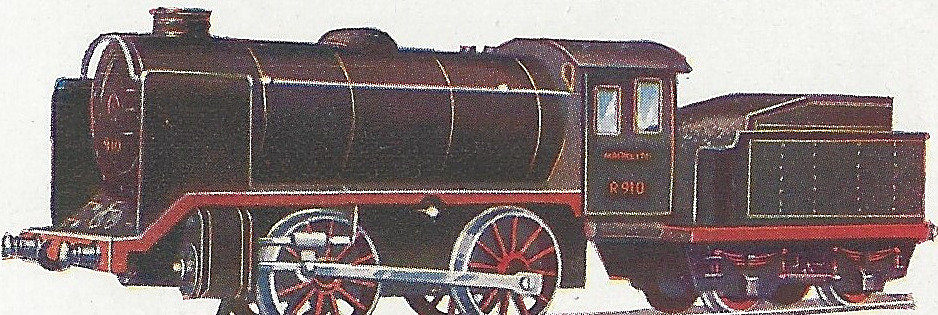
Clockwork locomotive R 910 N, 0 gauge (1936 catalog) spring motorbrakeforward and reverse - from 1895Steam and mains current
Live steam and the first electric trains
From the mid-1890s locomotives with a small steam engine and a spirit burner were added, as well as the first electrically powered trains. The early electric trains were connected directly to the household lighting circuit; the high mains voltage was only reduced by series resistors, often light bulbs. This was not without danger, and Märklin responded to exactly that in the 1920s with a completely new system.
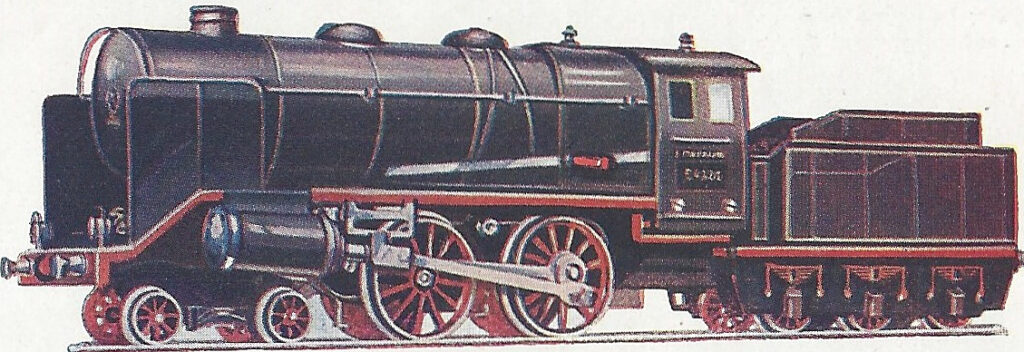
Live steam locomotive E 4920, 0 gauge (1936 catalog) steam enginemains voltagelamp resistor - 192720 volts
The Märklin system for 20 volts
The 1927 catalog presents the “new” electric trains for 20 volts: between the wall outlet and the track there is a connection unit that reduces the mains voltage to a harmless 20 volts. Households with AC needed a transformer with a built-in speed controller; on DC mains a rotary converter, a small motor-generator, was required. This allowed the trains to meet the new VDE regulations for electric toys of the time. The motors were universal motors and ran on both types of current.
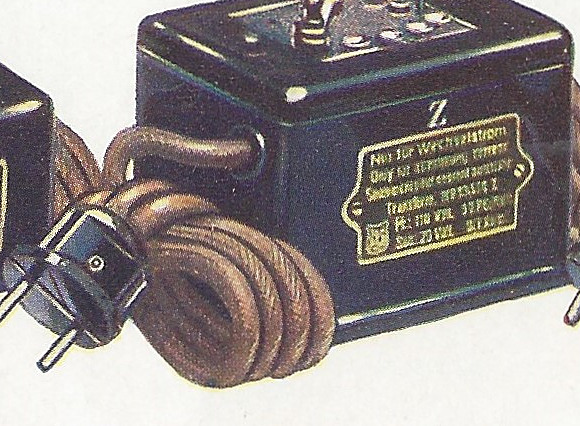
Transformer set 13474 ZG for AC (1936 catalog) 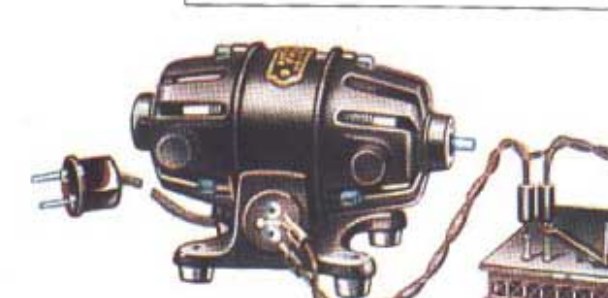
Rotary converter for DC lighting circuits (1935 catalog) transformerrotary converterVDEuniversal motor - until 1935Reversing
Direction: from interrupting the current to remote reversing
On the 0 gauge and gauge I locomotives of the early 1930s the direction changed as soon as the current was briefly interrupted. There was a catch: even a bumpy contact on a turnout could make the locomotive reverse unintentionally. In the 1935 catalog Märklin therefore introduced the new remote reversing: an additional unit between transformer and track (13374 for AC, 13376 for DC) sets the direction, and after every stop the locomotive continues in the selected direction. In the old item numbers the code 66 stands for automatic reversing and 70 for the new remote reversing, for example E 66/12920 and E 70/12920.
In the 1930s Märklin also offered low-voltage trains for 4 volts that ran on batteries (cells) or accumulators. The locomotives had a motor with a permanent magnet, and their direction was changed with a reversing switch.
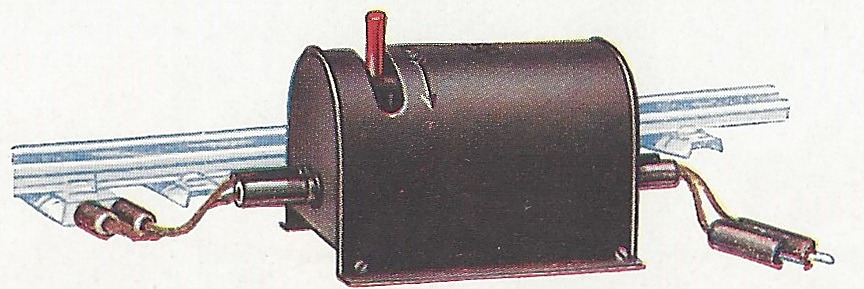
Remote reverser 13374 (AC) 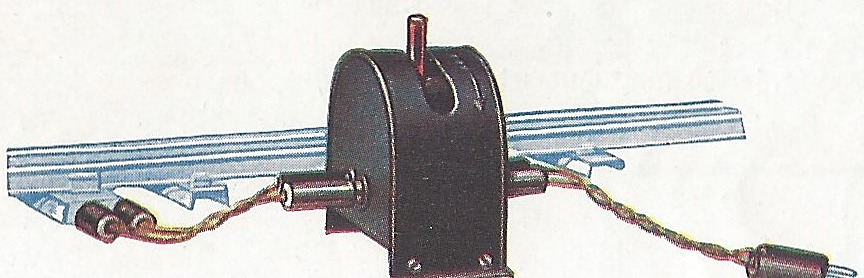
Remote reverser 13376 (DC) 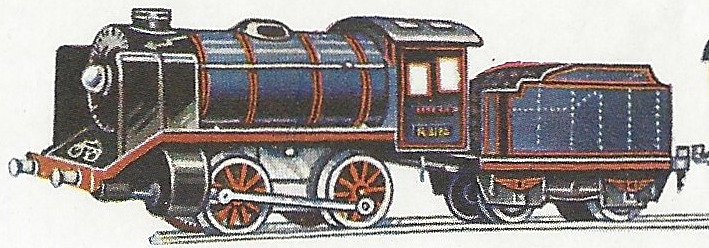
Low-voltage locomotive R 3180 for 4 volts code 66code 70remote reverser 13374/13376
00 and H0 gauge: from the tabletop train transformer to the Central Station
- 193500 gauge
The tabletop railway with 16.5 mm gauge
In 1935 Märklin launched the electric 00 gauge, a train that fits on a table. It ran on the proven 20-volt system via the center rail: on AC mains with the transformer 13474 X (about 12 VA, speed controller with four steps), on DC mains with a converter. The first locomotives such as R 700 and RS 700 were reversed by hand on the locomotive itself; for remote reversing there were separate switching units for each type of current (494 and 496).
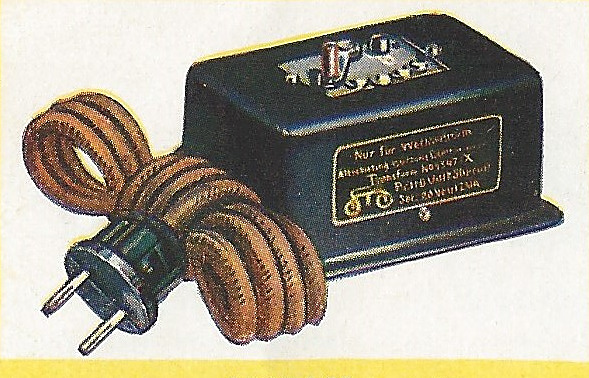
Transformer 13474 X for 00 gauge 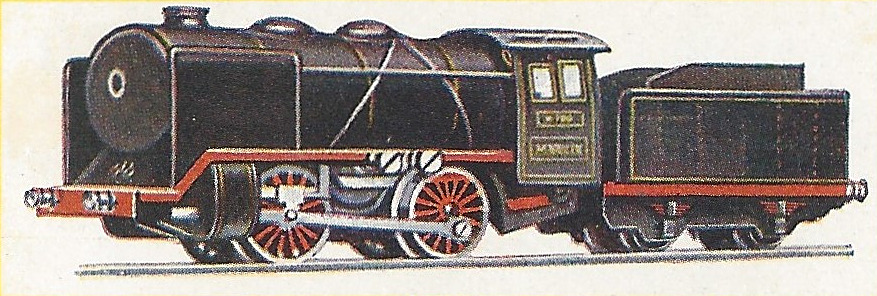
R 700 with manual reversing 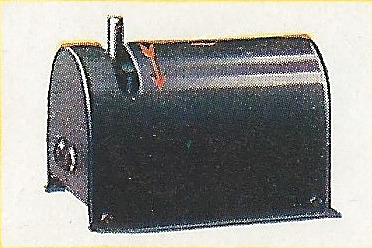
Switching unit 494 for remote reversing 16.5 mm20 Vcenter railmanual reversing - 1938Perfekt switching
Perfekt switching and two-train operation
With the catenary railway, the 1938 catalog introduced the “Perfekt” switching system. Its trick: running current and switching current are separate. Pressing the button on the transformer 270 A (25 VA) briefly sends a higher voltage to the track, and the locomotive switches one step further: forward, stop with lights, reverse, stop with lights. Brief interruptions on turnouts no longer trigger reversing. Using the center rail and the catenary, two trains could now run independently on one track, each with its own transformer. This principle of the reversing pulse remained with Märklin H0 until the digital age.
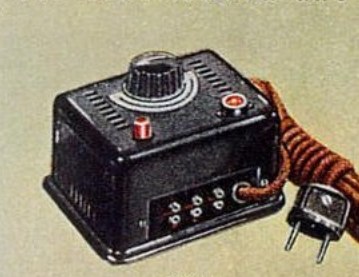
Transformer 270 A with reversing button (1938 catalog) reversing pulsetransformer 270 Acatenary2 trains - 1947Postwar
A new start with the 260 and 280 A
After the war there was at first the small transformer 260 (10 VA, blue desk-style housing, infinitely variable control); the direction of the matching locomotives was still selected by hand. Larger layouts got the “Märklin Super” 280 A with 30 VA, which reverses when the control knob is pressed. It remained in the range in various versions until around 1960.
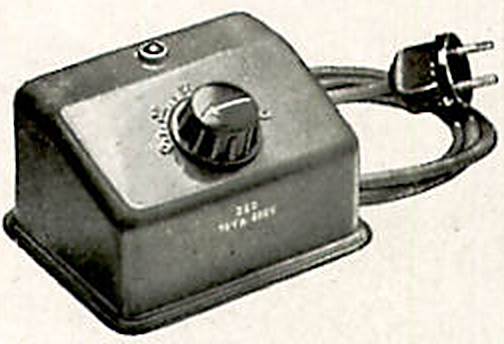
Transformer 260 (1949 catalog) 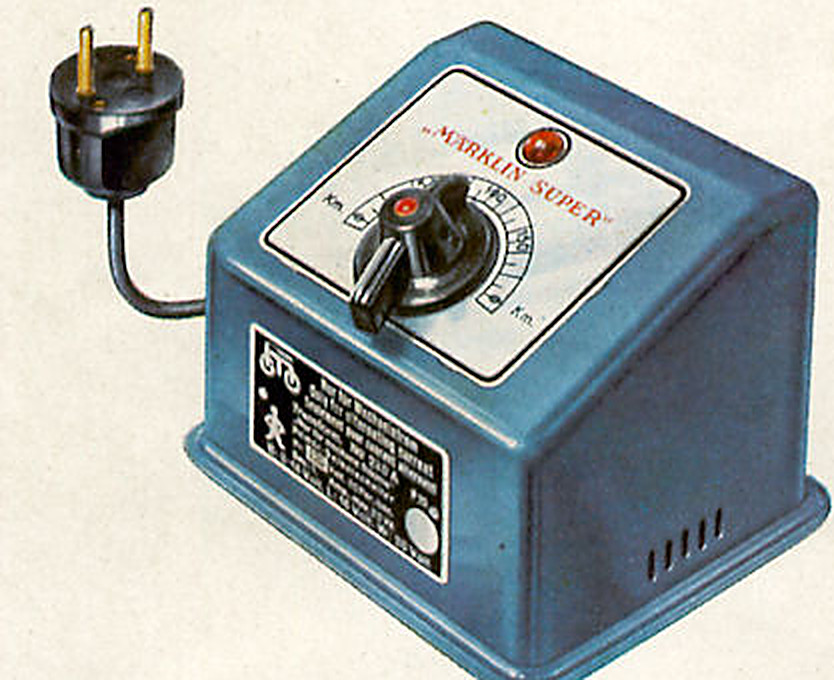
280 A “Märklin Super” (1949 catalog) 260: 10 VA280 A: 30 VAinfinitely variable - 1950sH0
00 gauge becomes H0
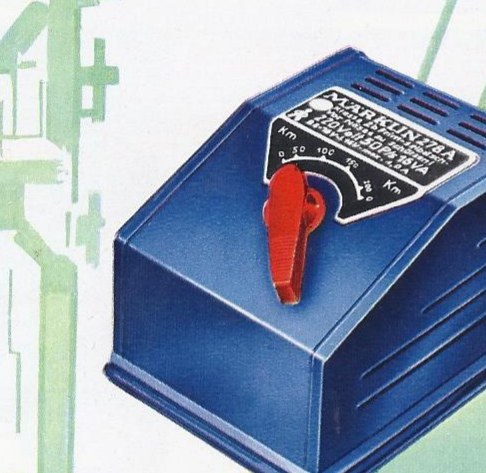
In the early 1950s the name H0 became established for the 16.5 mm railway; the 1953 catalog speaks of H0 gauge throughout. The smaller transformer 278 A (16 VA) was added. Anyone who still had DC at home connected an inverter (276, 100 VA) ahead of the transformers, because the train itself now ran on AC only. During the 1950s Märklin gradually replaced the continuous center rail with inconspicuous stud contacts.
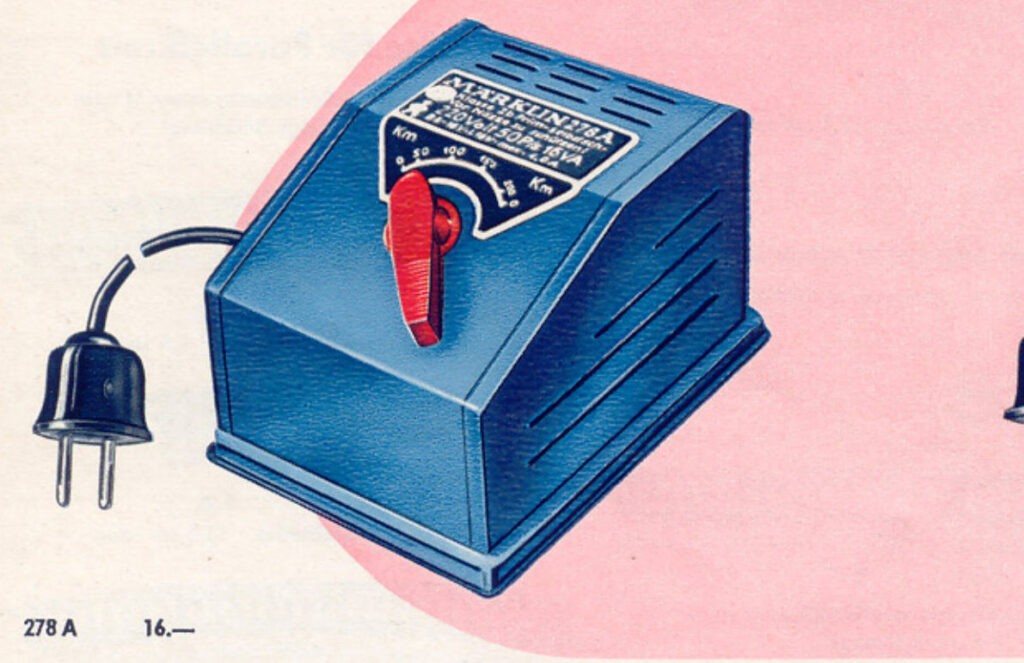
Transformer 278 A, 16 VA 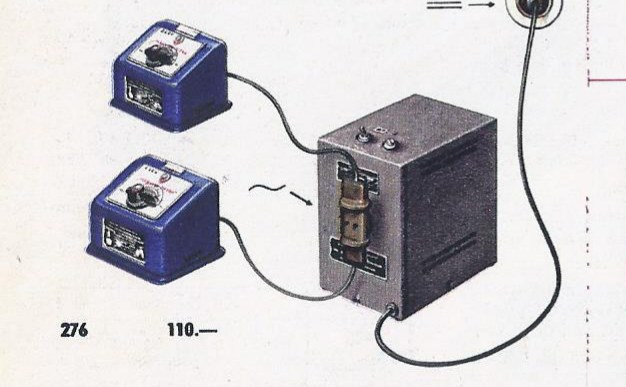
Inverter 276 feeding two transformers (1953 catalog) 278 A: 16 VAinverter 276stud contacts - 19576000 series
New numbers, 24-volt pulse
With the change to four-digit item numbers, the transformers were called 6010 to 6013 (16 VA) from 1957, and 6110 to 6113, or 6170 to 6173 with a Schuko plug (30 VA); the last digit indicates the mains voltage. The catalog now explicitly calls the reversing pulse “Perfekt switching 24 V” and warns that the accessories are designed only for transformers up to 35 VA. For lights and solenoid accessories there were separate lighting transformers with 35 VA.
16 VA transformer 6010–6013 (1957 catalog) 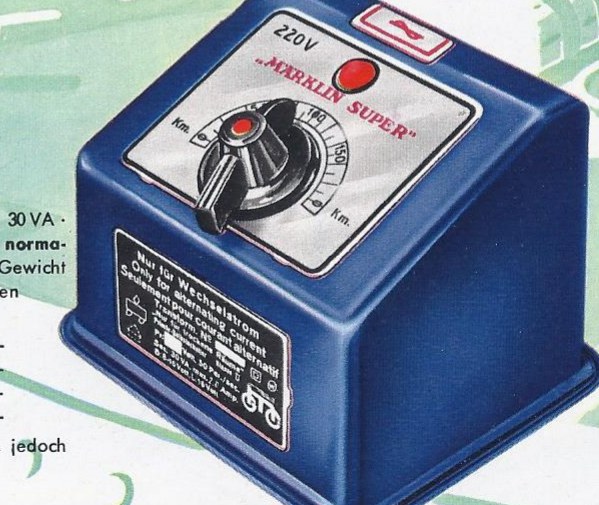
30 VA transformer 6110–6113 (1957 catalog) 16 VA30 VA24 V pulseAC only - 1960s6117 and 6511
The “built-in engineer”
In the 1960s the 30 VA transformer 6117 and the 16 VA transformer 6511 set the tone, along with the lighting transformer 6211 with 50 VA. The 1969 catalog explains the Märklin principle like this: everything runs on AC, including the smoke generator and Telex coupler, and the reverser in the locomotive, the “built-in engineer”, determines the direction, regardless of which way the locomotive faces on the track. From 1966 HAMO also offered H0 locomotives for two-rail DC.
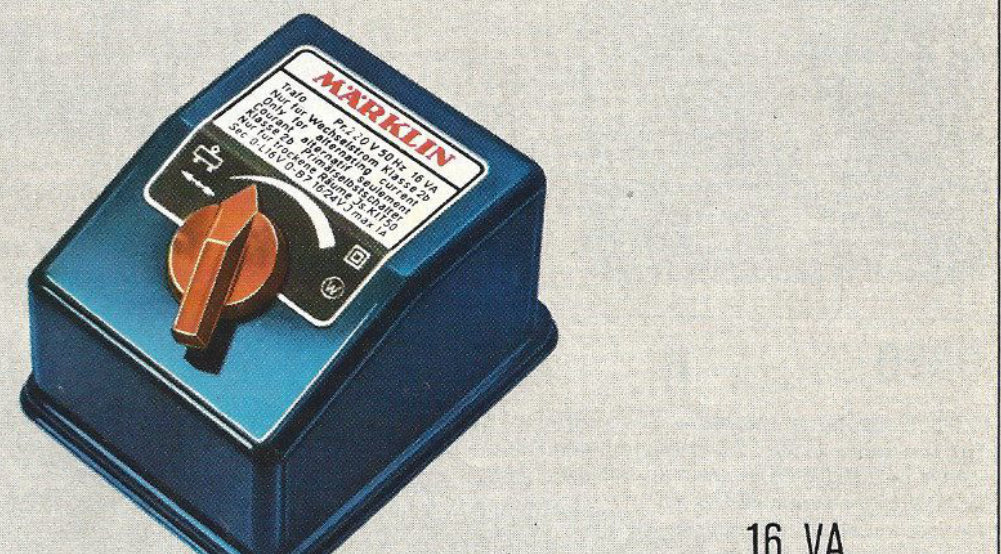
6511, 16 VA 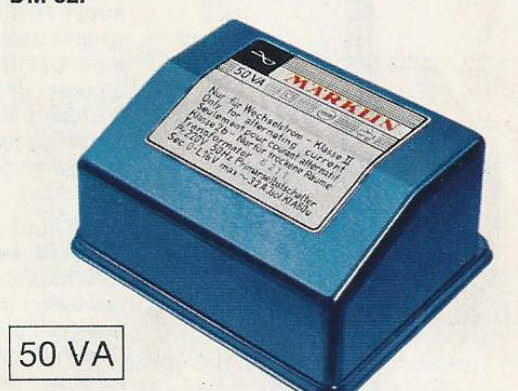
Lighting transformer 6211, 50 VA 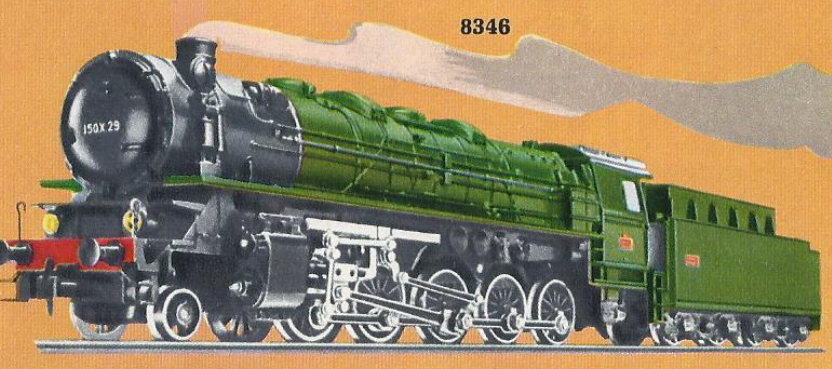
HAMO 8346 for DC (1966) 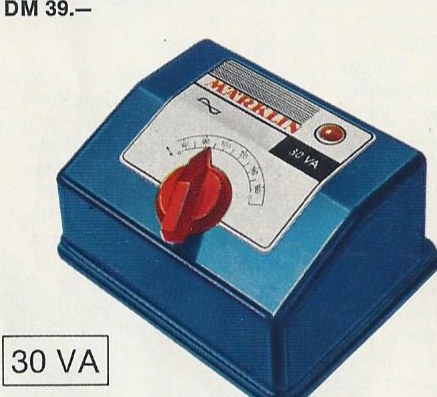
6117, 30 VA (1969 catalog) 6117: 30 VA6511: 16 VAHAMO from 1966 - 1972Plastic transformers
6631, 6671 and the lighting transformer 6611
From 1972 the transformers came in plastic housings: the 6631 with 30 VA and an adjustable running voltage of about 4 to 16 V, from 1975 the smaller 6671 with 16 VA, plus the lighting transformer 6611 with 40 VA. For extremely slow switching moves Märklin offered electronic controllers from the end of the 1970s (6699, later 6600), which were connected to a lighting transformer.
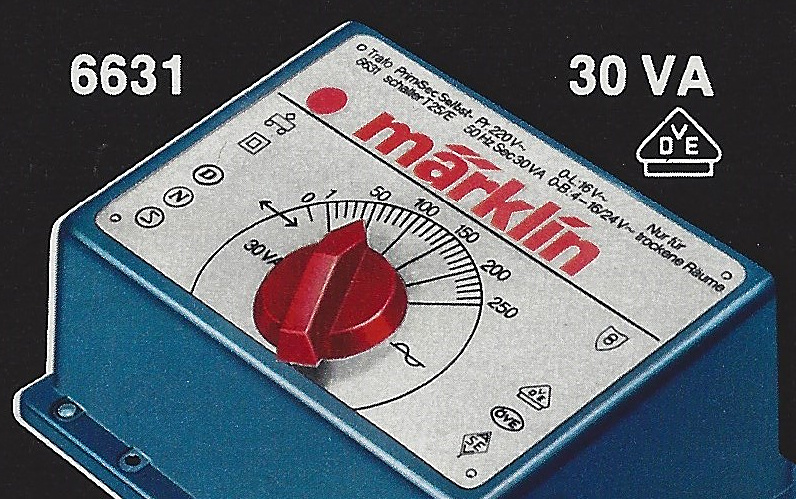
6631, 30 VA 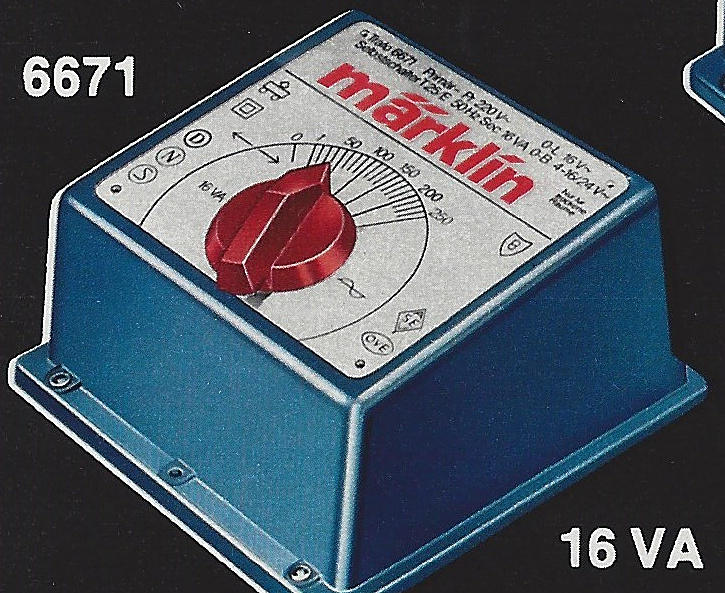
6671, 16 VA 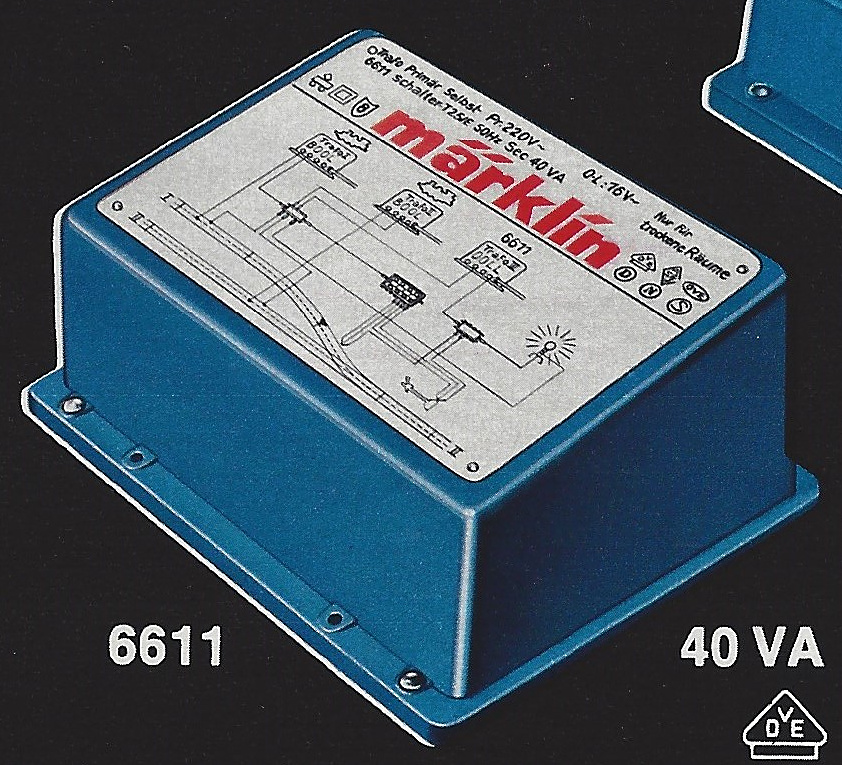
Lighting transformer 6611, 40 VA 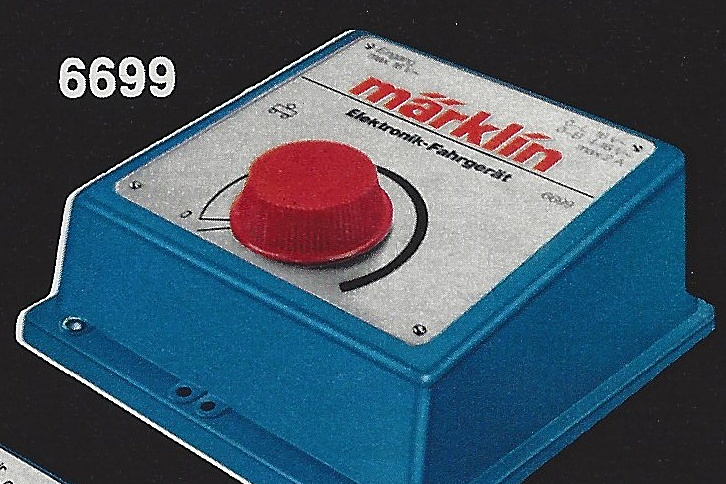
Electronic controller 6699 4–16 V6631: 30 VA6671: 16 VAelectronic controller - 1985Märklin Digital
Digital: the transformer becomes a power supply
For the company’s 125th anniversary, Märklin presented Märklin Digital on September 13, 1984; sales began in 1985. Full voltage is now always on the track, and the running commands go as a data packet to the decoder of the respective locomotive. The transformer only supplies the power; for this there was the Transformer 6002 with 52 VA. Control is through the Central Unit 6020 with the plug-in units Control 80 (controller), Keyboard (turnouts and signals), Memory (routes) and Interface (computer). From the 1988/89 catalog the Control 80 f with function buttons and the Digital= version for two-rail DC trains (Central Unit= 6027) were added. In 1994 the Control Unit 6021 followed, combining central unit and controller in one housing and controlling both H0 and 1 gauge. More about the decoders can be found in the decoder guide.
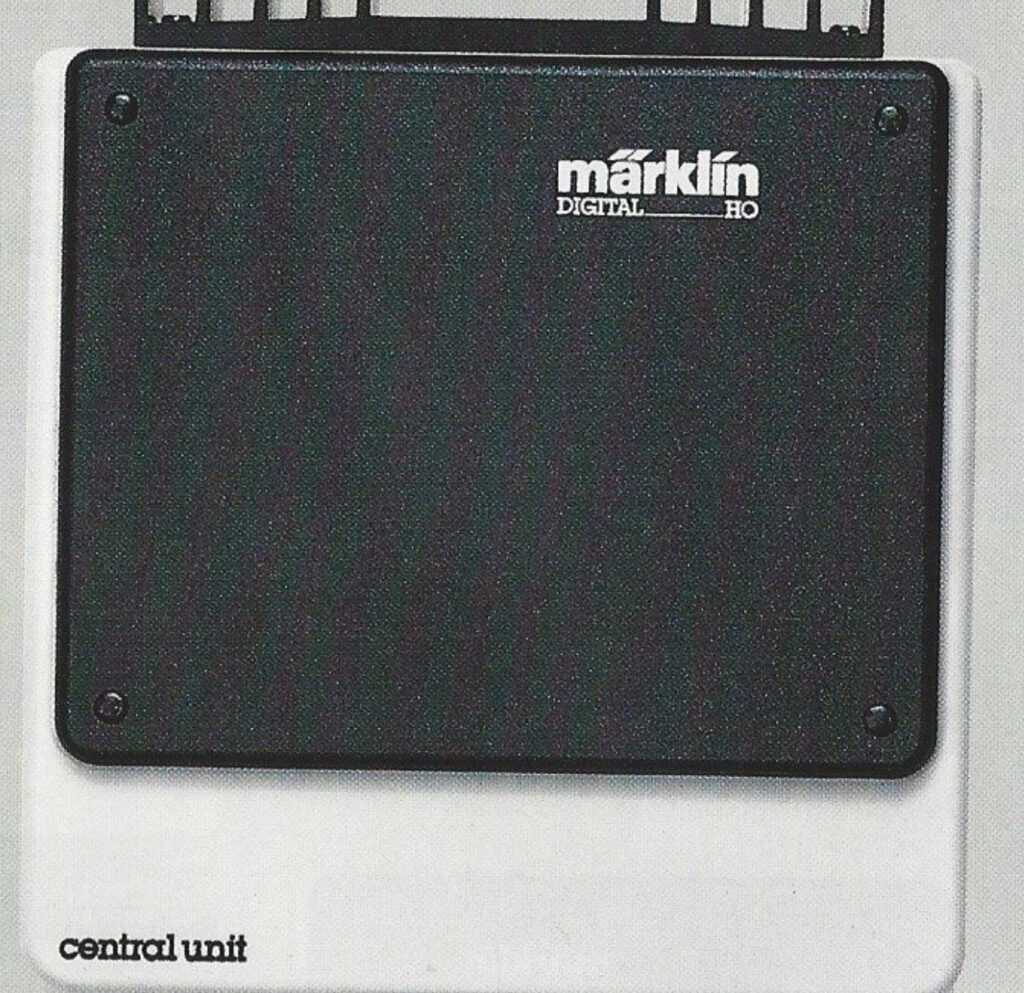
Central Unit 6020 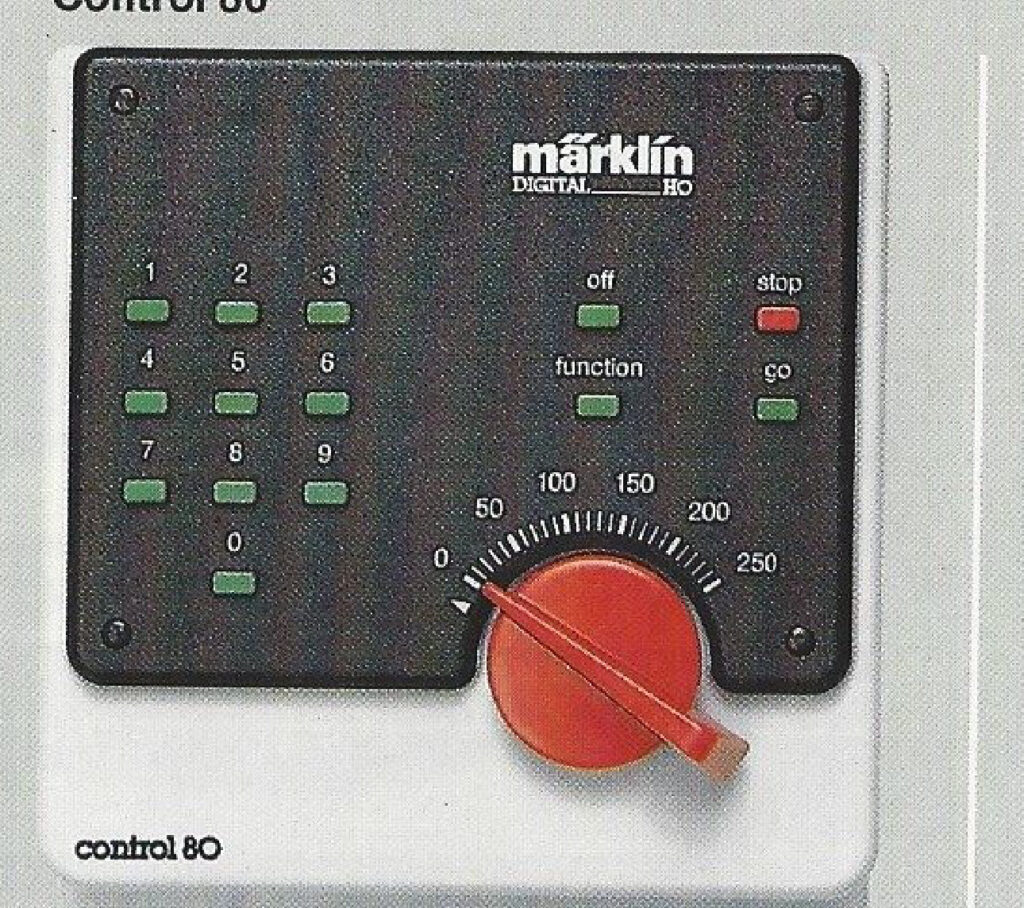
Control 80 (6035) 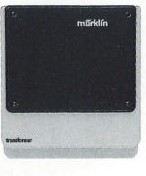
Transformer 6002, 52 VA 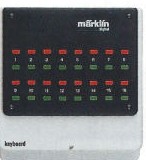
Keyboard 6040 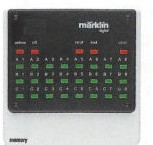
Memory 6043 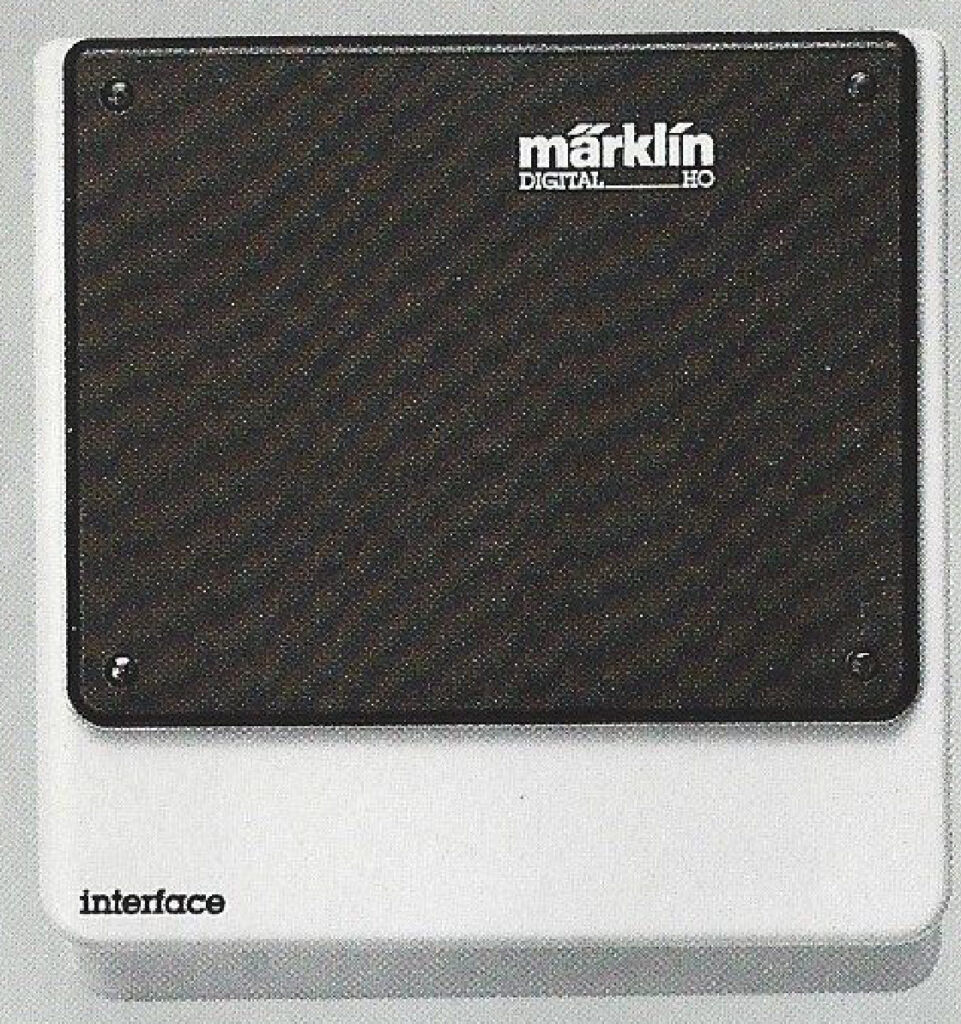
Interface 6050 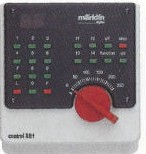
Control 80 f (6036) 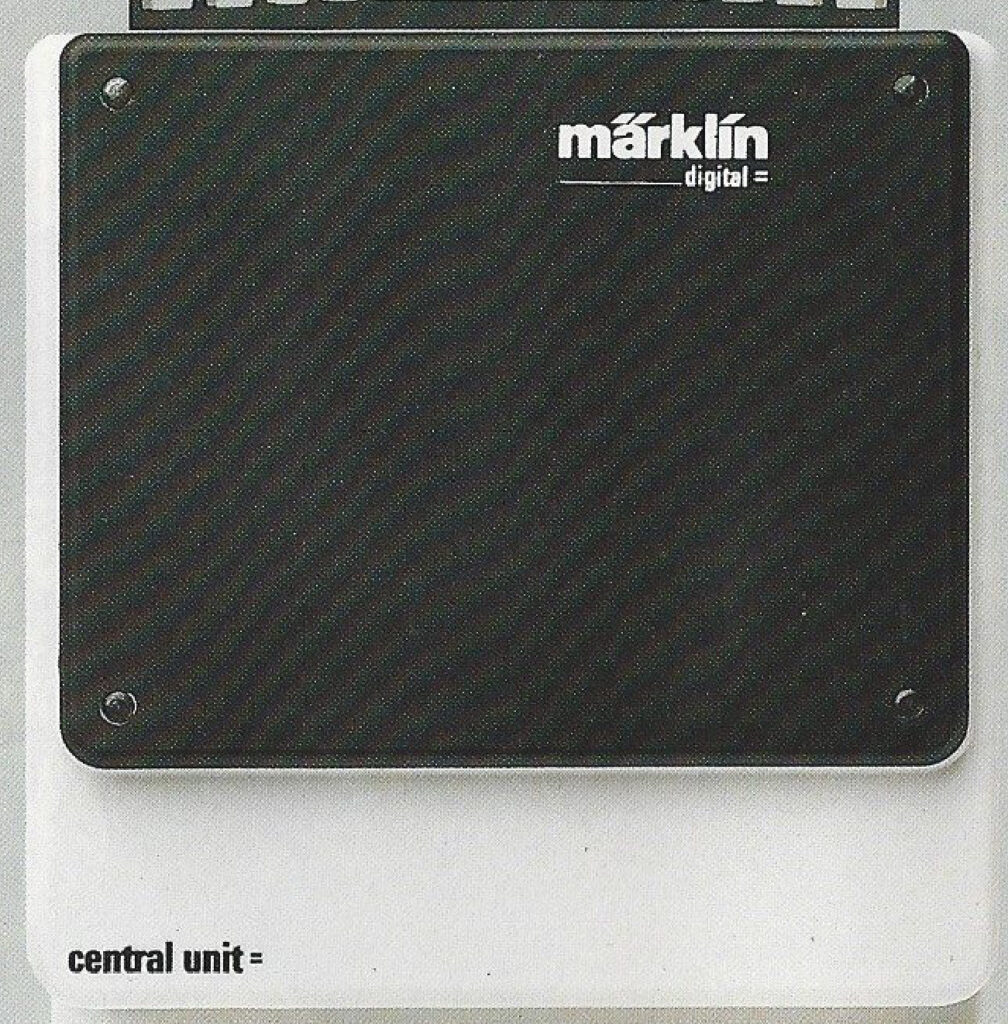
Central Unit= 6027 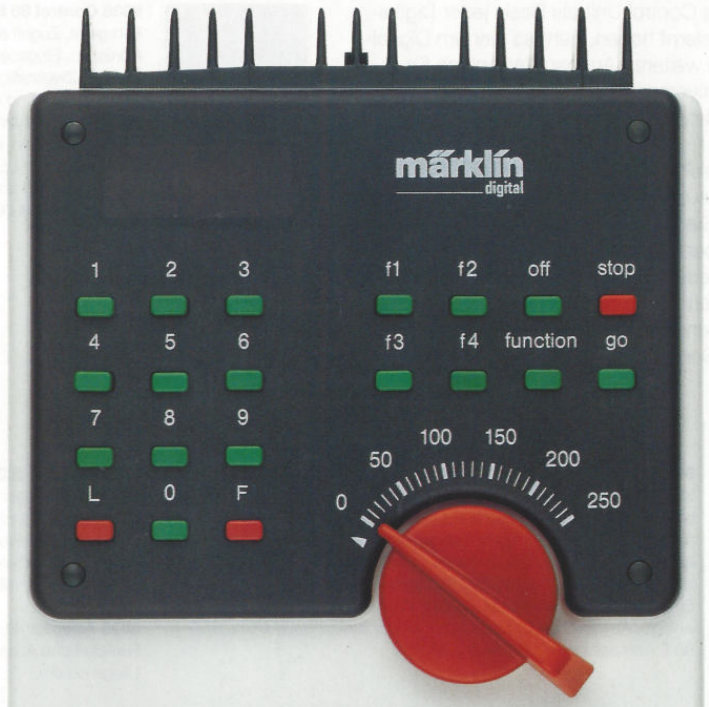
Control Unit 6021 (1994) presented in 1984Central Unit 6020Transformer 6002Control Unit 6021 (1994)80 addresses - 1990ALPHA
Safe for children: the battery controller
For the simple ALPHA train, Märklin introduced the safety controller 6710 with a built-in rechargeable battery in 1990: with it the train runs for about an hour without a connection to the mains, and a plug-in pack (6709) extends the running time.
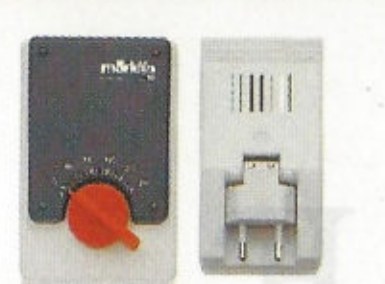
Safety controller 6710 rechargeable batteryno wall power needed - 1992Delta
Delta: multi-train operation for beginners
Delta was the simplified multi-train control: the Delta Control 6604 goes between transformer and track and controls four Delta locomotives plus one locomotive without a decoder. For maxi and Märklin 1, the Delta Station 6607 and the Delta Mobil 6608 hand controllers were added in 1994, allowing several people to run trains at the same time, even in the garden. In 2003 the Delta Control 4 f (66045) followed.
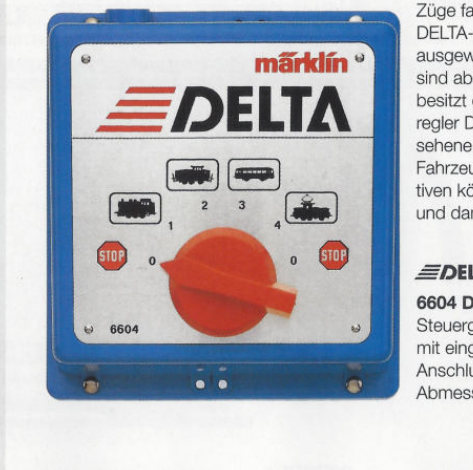
Delta Control 6604 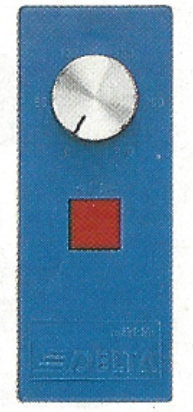
Delta Pilot 6605 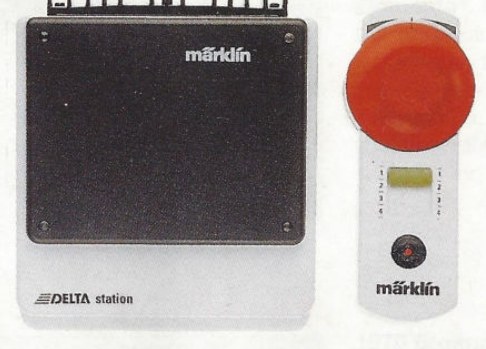
Delta Station 6607 and Delta Mobil 6608 (1994 new items) 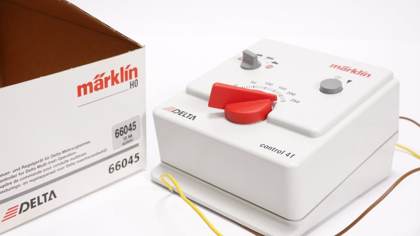
Delta Control 4 f (66045) 66046607 + 660866045 - 199432 VA
The 32 VA transformer
From 1994 Märklin offered the transformer 6647 with 32 VA for 230 volts. Its successors 66470 (2012) and 66471 (2018) are also 32 VA safety transformers and are still the choice for analog operation on H0 layouts today.
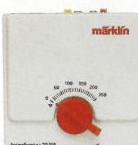
6647, 32 VA 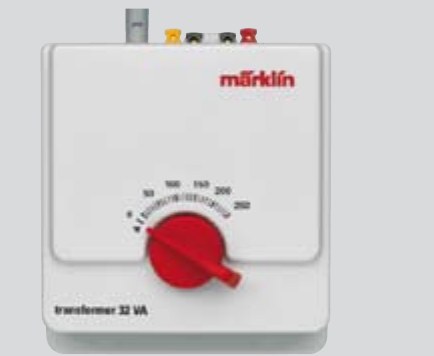
66470, 32 VA (2011 summer new items) 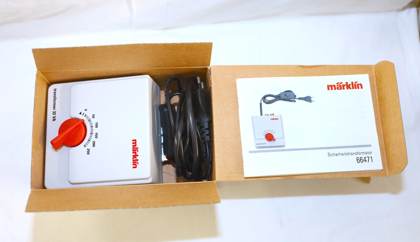
Transformer 32 VA (66471) 66476647066471 - 2004Märklin Systems
Central Station and Mobile Station
In 2004 a new generation began with Märklin Systems: the Central Station 60212, developed together with ESU, and the handy Mobile Station 60652. Both support the new mfx format, in which the locomotives register themselves. Instead of a classic transformer, a power supply unit (60052, 60 VA) now powers the central unit.
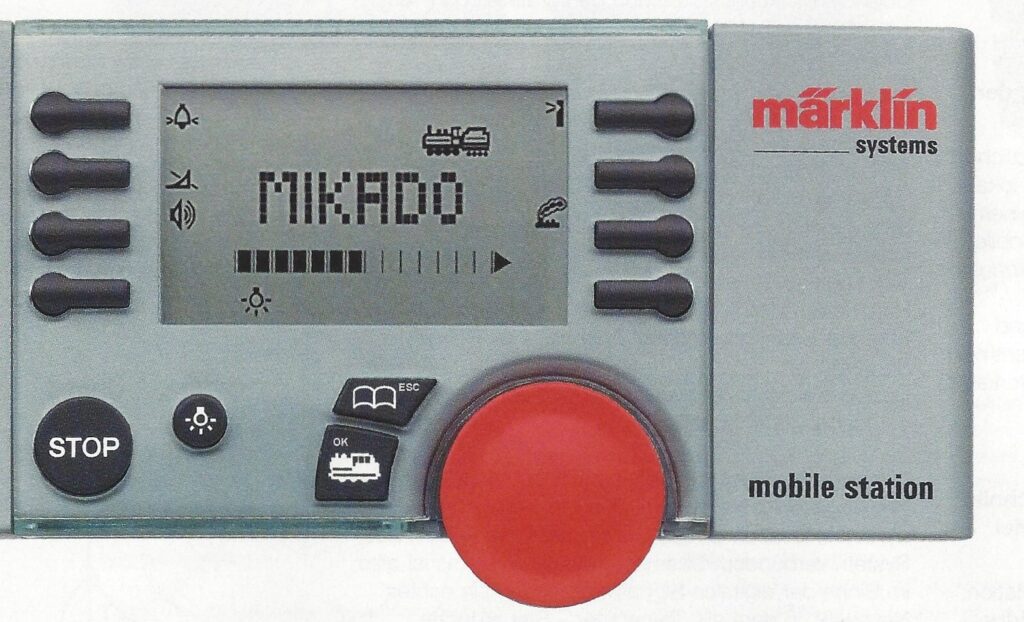
Mobile Station 60652 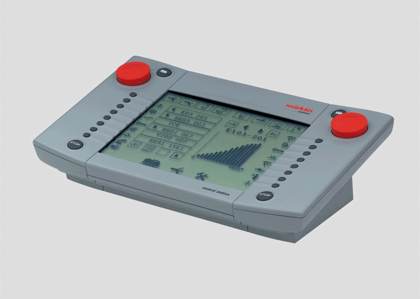
Central Station 60212 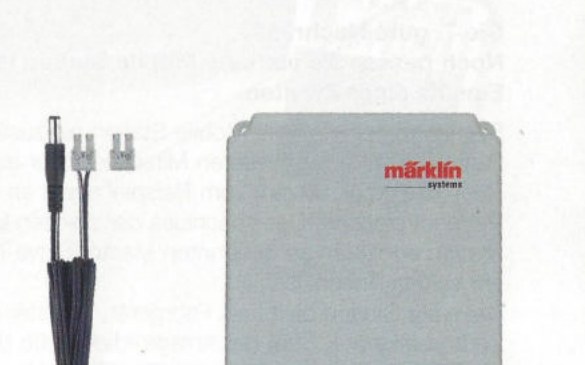
Power supply 60052, 60 VA (2004 new items) 6021260652mfxpower supply 60 VA - 2008CS2
Central Station 2 and Mobile Station 2
At the end of 2008 the Central Station 2 (60213) arrived, from 2009 as the 60214 also with DCC for third-party decoders, and from 2011 as the 60215 with a stronger track output. Around 2010 the Mobile Station 2 (60653) appeared; for it a Gleisbox (60113, later 60116) supplies power and signal to the track. From 2011 a family of switched-mode power supplies with 36, 60 and 100 VA (66361, 60061, 60101) replaced the older power supply units.
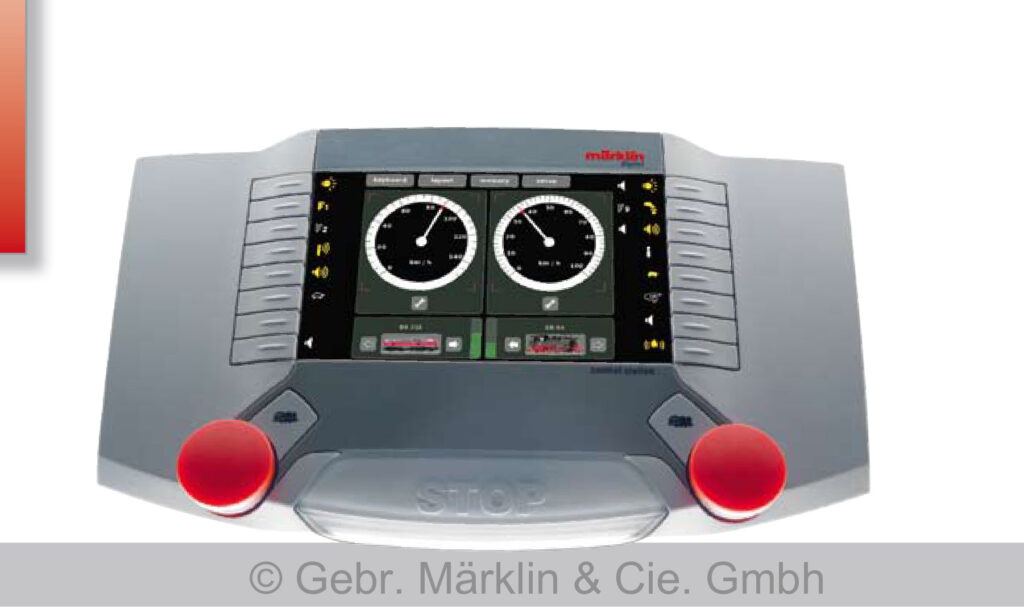
Central Station 60213 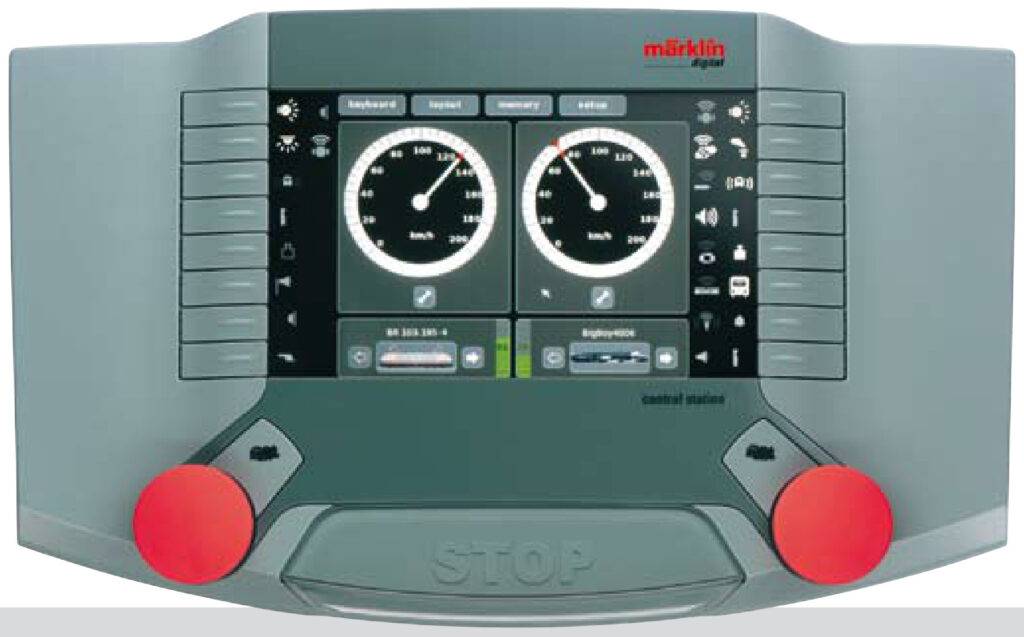
Central Station 60215 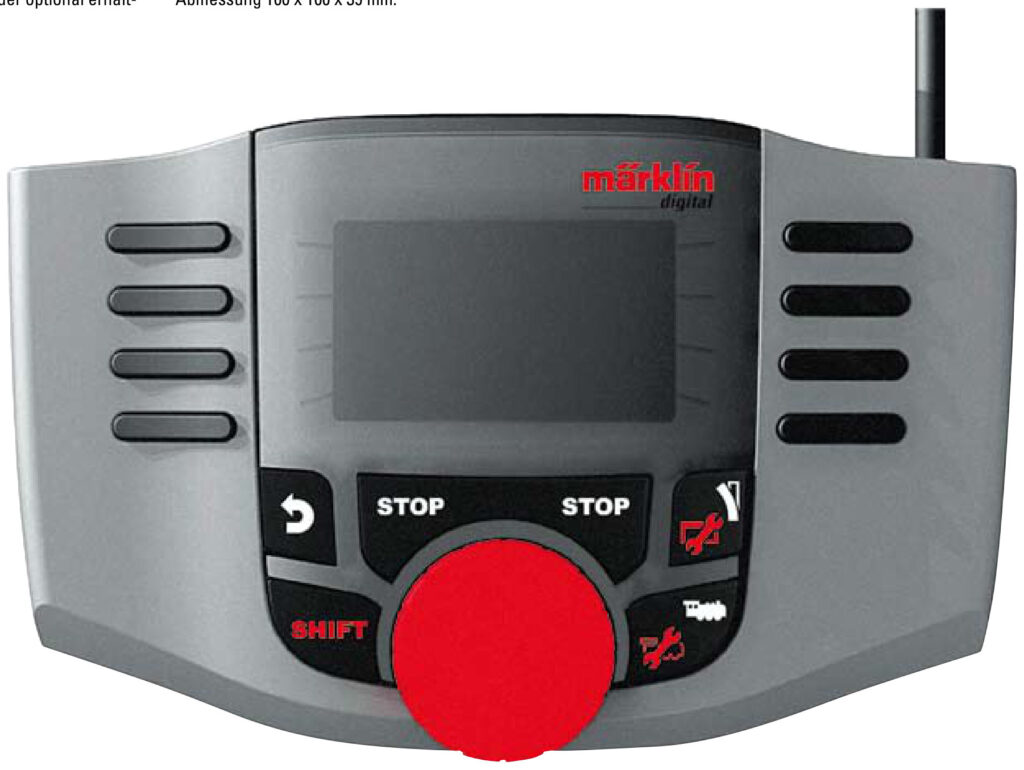
Mobile Station 2 (60653) 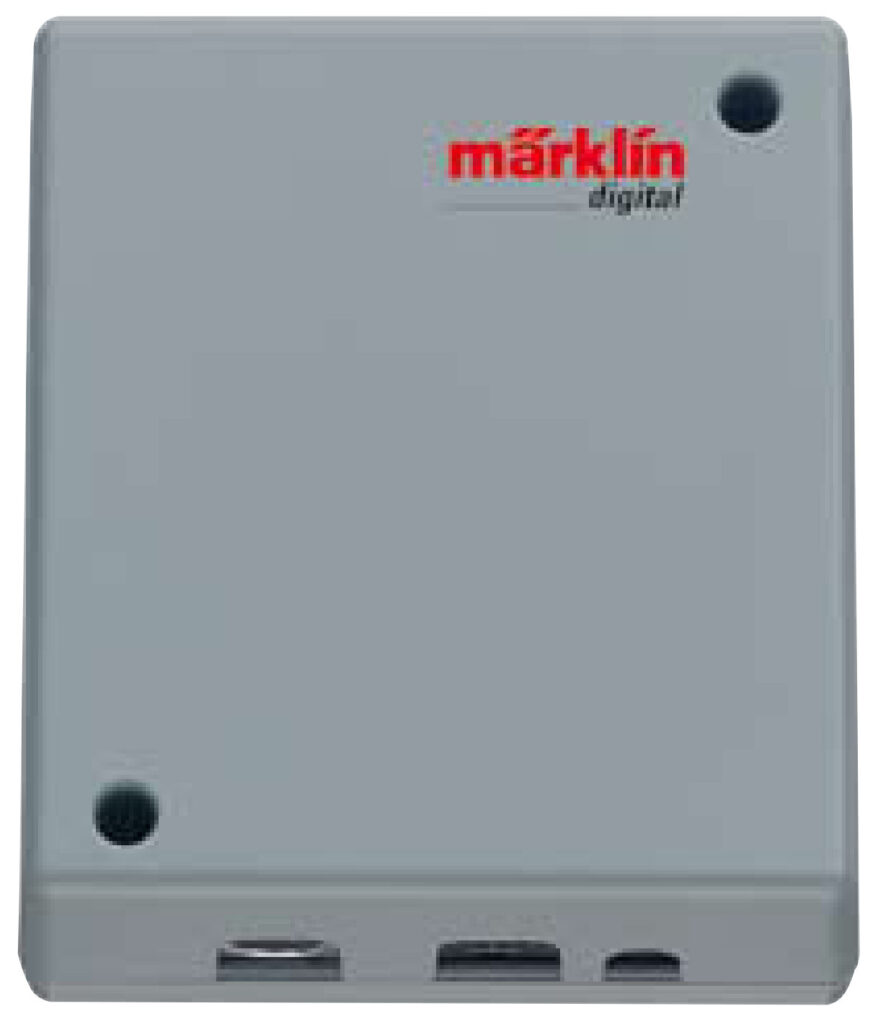
Gleisbox 60113 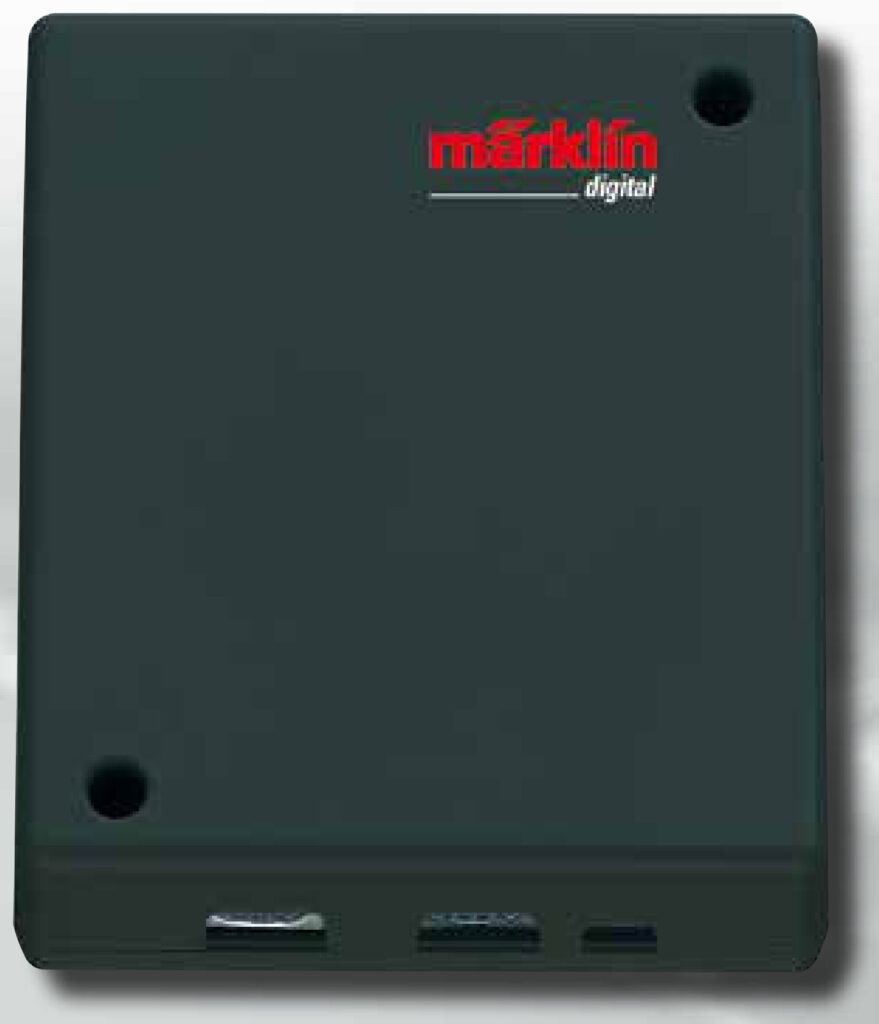
Gleisbox 60116 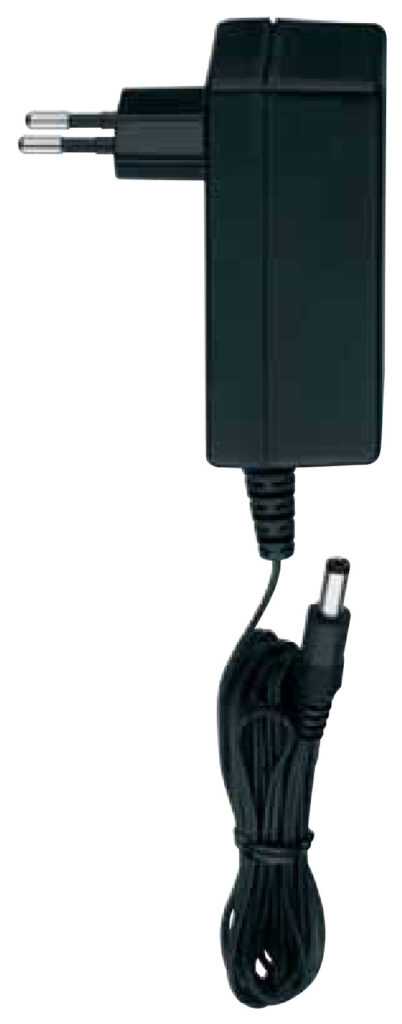
Switched-mode power supply 66361, 36 VA 
Switched-mode power supply 60061, 60 VA 
Switched-mode power supply 60101, 100 VA 60213 / 60214 / 6021560653Gleisboxswitched-mode power supplies - 2011my world
my world: battery-powered play train
Since 2011 there has been the Märklin my world range for children aged three and up. The trains run on batteries and are controlled with an infrared remote control; no transformer is needed.
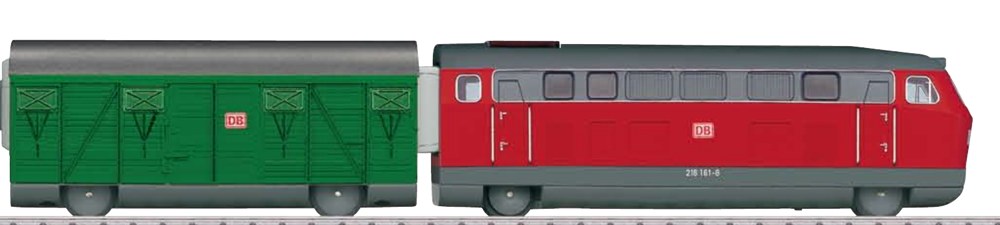
my world train (2012 new items) 
Infrared remote control batteryinfrared - 2016CS3
Central Station 3 and CS3 plus
In 2016 Märklin presented the Central Station 3 (60226) and the Central Station 3 plus (60216); they were in the shops from 2017. They are operated through a large touch screen; the central units handle mfx, mfx+, Motorola and DCC and can be extended with a tablet or smartphone. Since then the Mobile Station has been available in the revised version 60657.
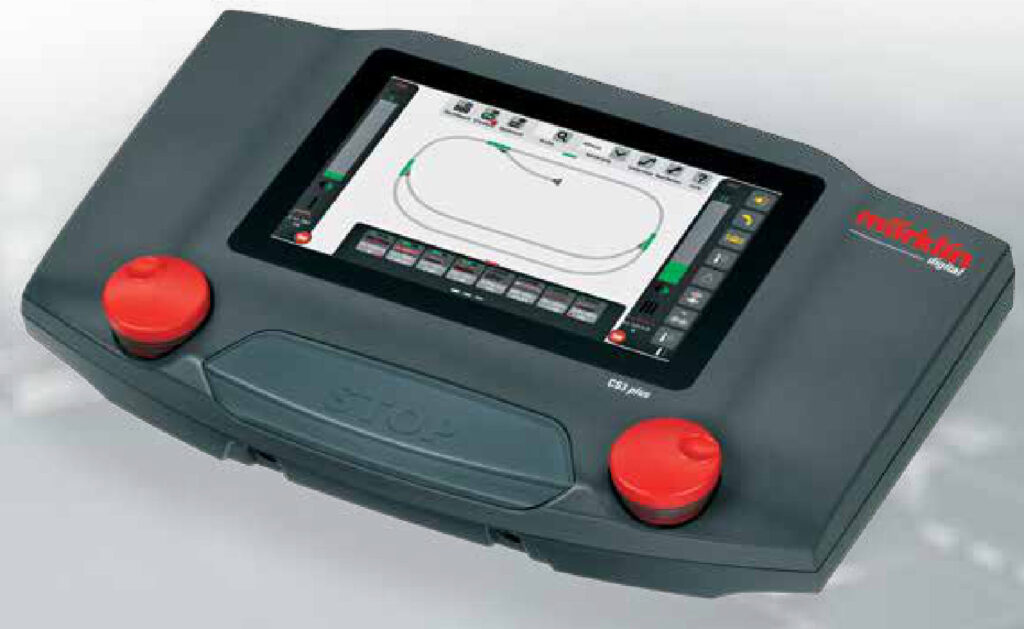
Central Station 3 plus (60216) 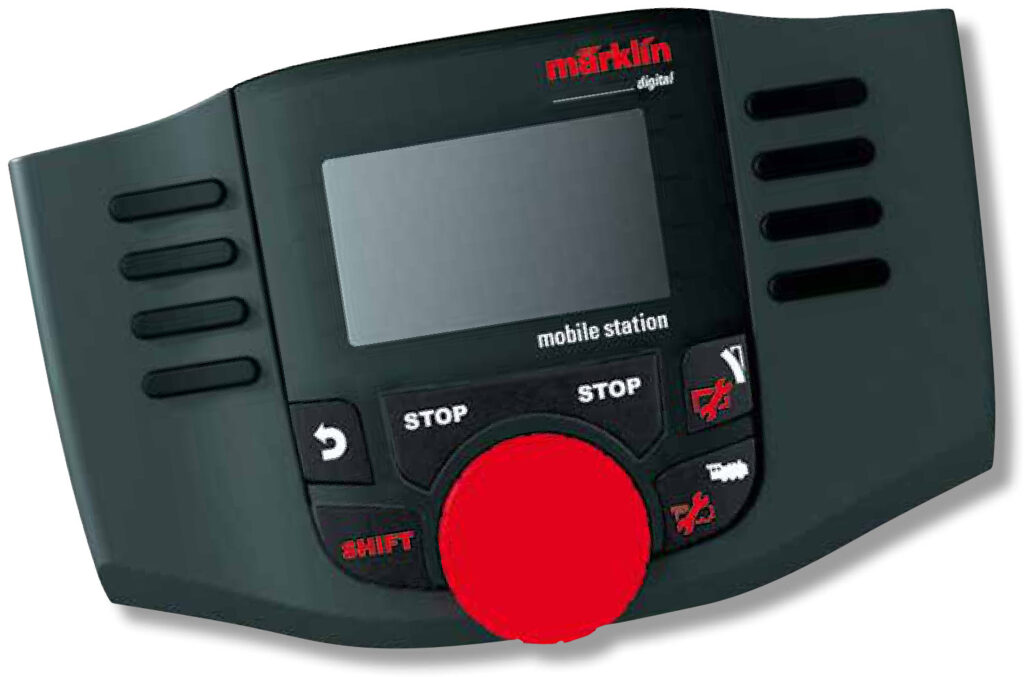
Mobile Station 60657 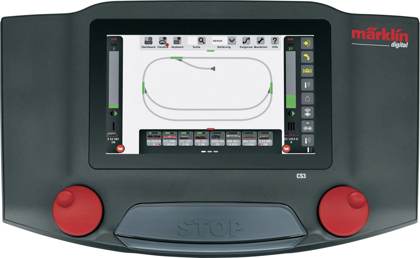
Central Station 3 (60226) 6022660216touch screen - 2023Wi-Fi
Mobile Station WLAN
The Mobile Station WLAN (60667) is a cordless, battery-powered hand controller. It connects by radio to a Central Station or to the WLAN receiver box 60117, which can handle up to four of these hand controllers.
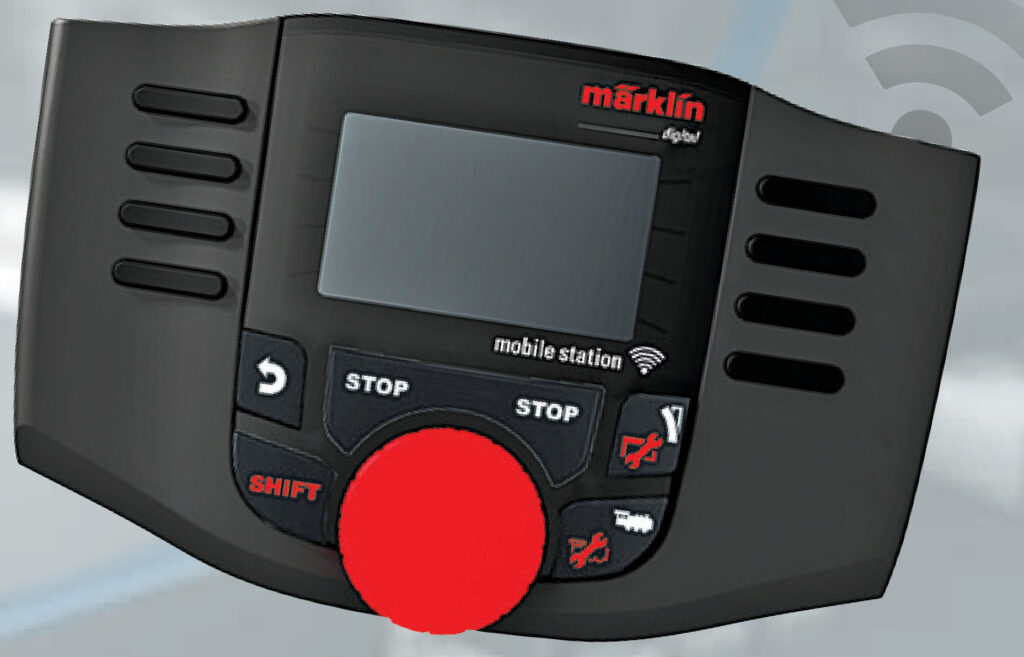
Mobile Station WLAN (60667) 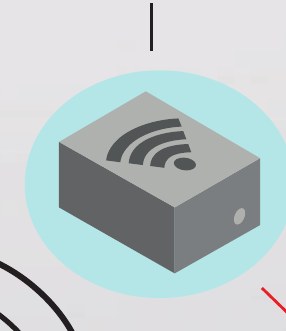
WLAN receiver box 60117 (2023 new items) 60667receiver box 60117cordless
1 gauge: a second life from 1969
- 1891Gauge I
The large gauge of the early years
Gauge I was there from the start, with clockwork, steam and, from the 1920s, the 20-volt system. In the 1930s it became increasingly rare; after the Second World War Märklin no longer offered gauge I trains.
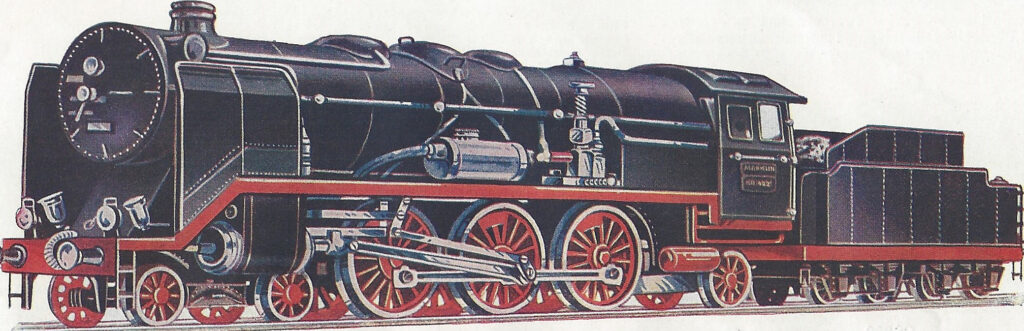
Live steam locomotive HR 4921, gauge I (1936 catalog) 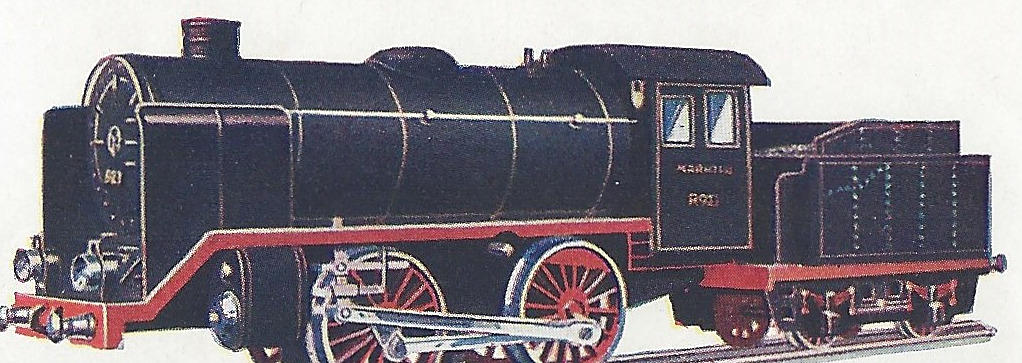
Clockwork locomotive R 921, gauge I (1936 catalog) clockworksteam20 V - 1969Märklin 1
A new start in 1:32 scale
In 1969 the catalog announced the new 1 gauge: models in 1:32 scale on 45 mm track, this time with two-rail track but still with AC motors. This kept one advantage of the H0 system, because reversing loops and wyes cause no polarity problems. The H0 transformer 6117 served as the power source. From 1978 many locomotives were also available in a version for two-rail DC, and around 1982 Märklin 1 got electronic reversing.
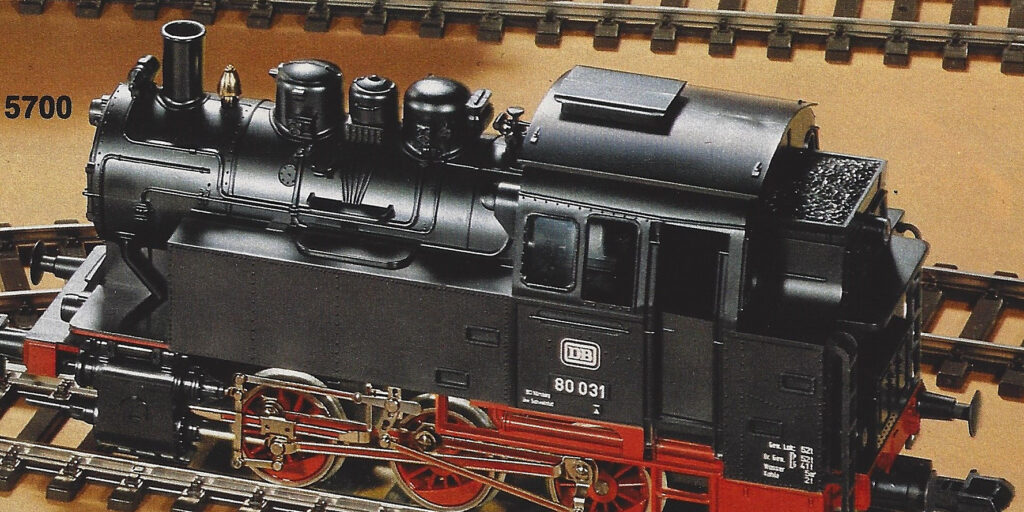
Märklin 1: tank locomotive 5700, class 80 1:32two-rail ACDC also from 1978 - 1989Digital
Digital and all-purpose electronics
With the 1989/90 catalog Märklin 1 also went digital: single-motor locomotives got the c 85 decoder, control was through the Central Unit= 6027 with up to 80 addresses, and large layouts were divided into sections, each with a booster and a Transformer 6002. In the 1990s electronics went into the locomotives that let them run on AC, DC, Delta or digital as desired, from 1994 also in the new, low-priced Märklin maxi play train. Today the 1 gauge locomotives run with mfx and DCC decoders on the central units of the H0 system.
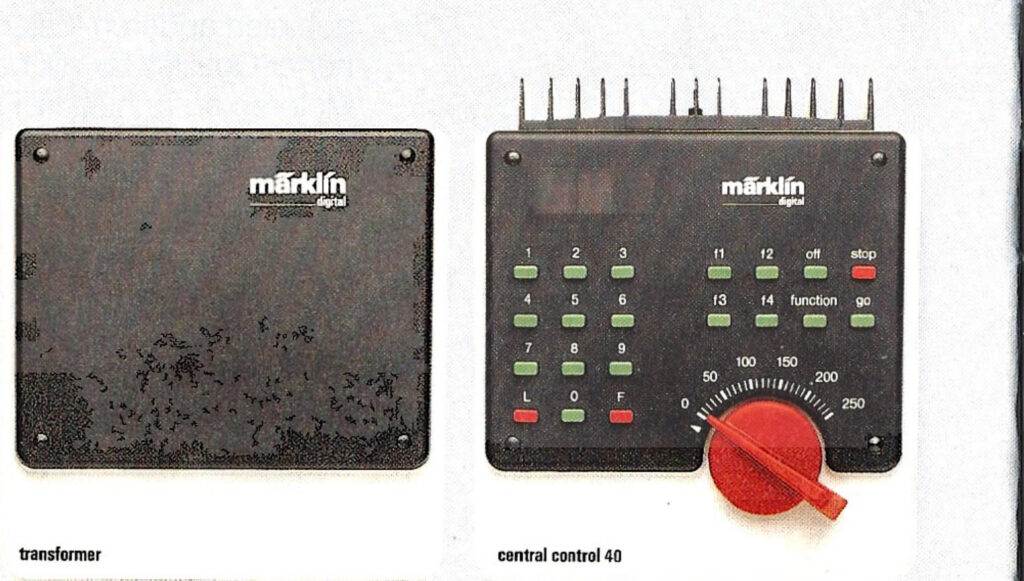
Digital basic set 5650 (1990 new items) 
maxi starter set 5440 Central Unit 6027transformer 6002maxi from 1994
Z gauge: mini-club since 1972
- 1972mini-club
6.5 mm and DC
In 1972 Märklin presented the mini-club, at the time the smallest electric production model railway in the world: 6.5 mm gauge, 1:220 scale. Unlike H0 it runs on DC; the direction changes by reversing the polarity. There were dedicated controllers for it, the 6711 with one knob and a running voltage of up to about 8 V, and the 6731 with a reversing switch, both with an additional output for lights.
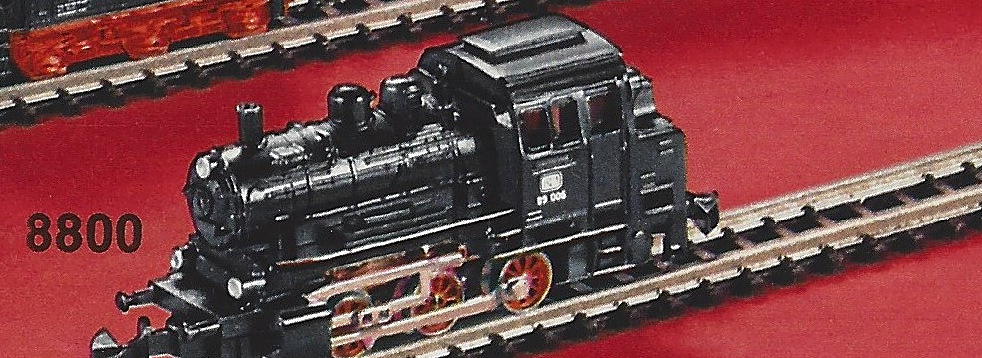
mini-club locomotive 8800, class 89 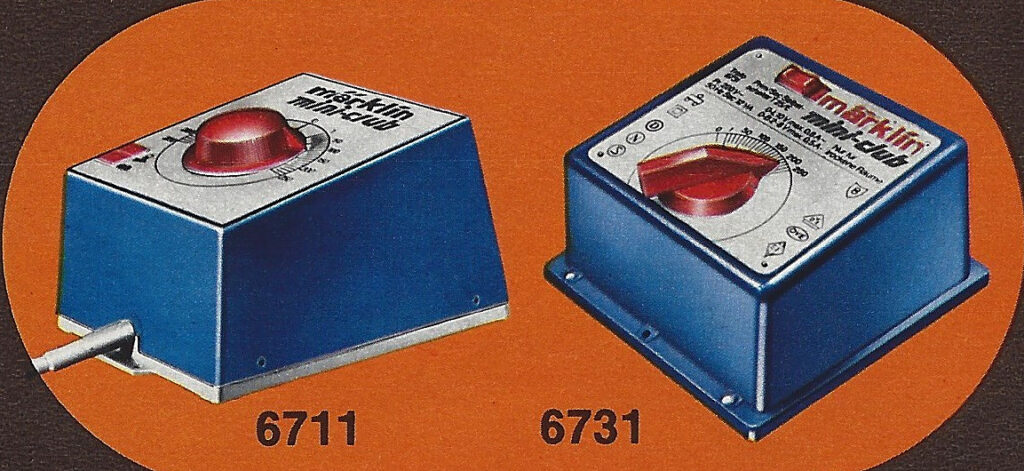
Controllers 6711 and 6731 6.5 mm1:220DC up to about 8 V - 1981Electronics
Fine control
The controller 6701 of 1981 regulates the voltage electronically and especially finely; in 1999 the Z controller 67011 followed, and since 2012 the 67013 with its own power supply.
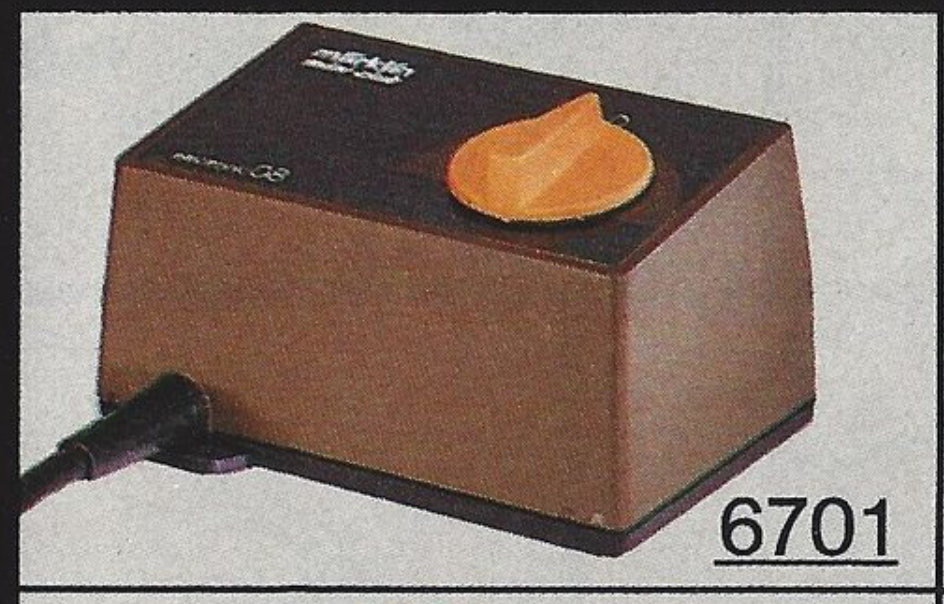
Controller 6701 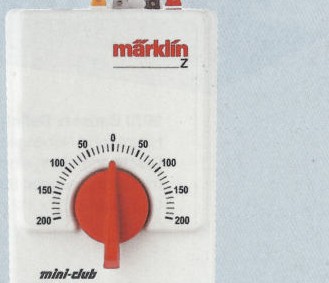
Z controller 67011 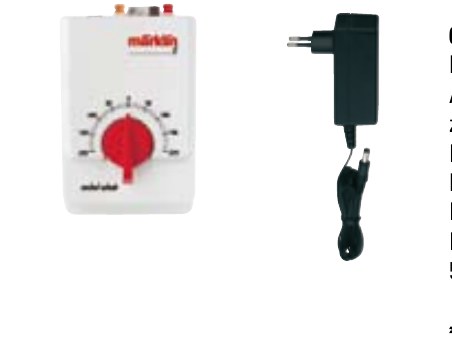
Z controller 67013 with power supply (2011 fall new items) 67016701167013 - todayanalog
Z gauge stays analog
Märklin still delivers Z gauge locomotives without a decoder. There were plans for digital mini-club locomotives at the end of the 1990s, but they were never realized. In our database the “Decoder” field therefore stays empty for Z gauge.
Märklin transformers and power supplies at a glance
The years give the span in which the item appears in our catalogs and price lists. There are no official Märklin price lists for 1980 to 2001, so the information for that period is less precise.
| Item | Years | Output | Special feature |
|---|---|---|---|
| 13474 X | 1936 | about 12 VA | first transformer for 00 gauge, speed controller with 4 steps |
| 270 A | from 1938 | 25 VA | Perfekt switching with reversing button |
| 260 | 1947–1949 | 10 VA | blue desk-style housing, without remote reversing |
| 280 A | 1947–1950s | 30 VA | “Märklin Super”, reverses when the knob is pressed |
| 278 A | 1953–1959 | 16 VA | small sheet-steel transformer |
| 6010–6013 | from 1957 | 16 VA | last digit = mains voltage |
| 6110–6113, 6170–6173 | from 1957 | 30 VA | 617x with Schuko plug |
| 6117 | 1963–1972 | 30 VA | also for 1 gauge from 1969 |
| 6511 | 1965–1975 | 16 VA | sheet-steel housing |
| 6631 | 1972–1994 | 30 VA | plastic housing, about 4–16 V |
| 6671 | 1975–1990 | 16 VA | little brother of the 6631 |
| 6611 | 1974–1990 | 40 VA | lights and solenoid accessories only |
| 6002 | 1985–2004 | 52 VA | “Transformer” for Märklin Digital, also for 1 gauge |
| 6647 | 1994–2011 | 32 VA | 230 V, standard transformer of the 1990s |
| 66470 / 66471 | from 2012 / from 2018 | 32 VA | today’s safety transformer for analog operation |
| 60052 | 2004–2010 | 60 VA | power supply for the Central Station |
| 66361, 60061, 60101 | from 2011 | 36, 60 and 100 VA | switched-mode power supplies for digital operation |
Digital central units and controllers
| Unit | Since | System | In short |
|---|---|---|---|
| Central Unit 6020 with Control 80 (6035) | 1985 (presented in 1984) | Motorola | central unit for plugging in further units, 80 addresses |
| Control 80 f (6036) | 1988/89 | Motorola | controller with function buttons |
| Central Unit= 6027 | 1988/89 | Digital= (two-rail DC) | central unit for two-rail DC and Märklin 1 |
| Control Unit 6021 | 1994 | Motorola | central unit with built-in controller, 80 addresses |
| Delta Control 6604, Delta Station 6607 | 1992 and 1994 | Delta | simple multi-train operation with few addresses |
| Central Station 60212, Mobile Station 60652 | 2004 | mfx, Motorola | Märklin Systems, locomotives register themselves |
| Central Station 2 (60213, 60214, 60215) | 2008 | mfx, Motorola, DCC from 60214 | color touch screen, mfx+ play world from 2013 |
| Mobile Station 2 (60653, later 60657) | around 2010 | mfx, Motorola, DCC | hand controller, connected to the track via the Gleisbox |
| Central Station 3 (60226), CS3 plus (60216) | 2016 | mfx, mfx+, Motorola, DCC | large touch screen, can also be operated by tablet |
| Mobile Station WLAN (60667) | 2023 | mfx, Motorola, DCC | cordless hand controller with batteries |
Analog transformers and digital central units must not be connected to the same track section. When converting a layout to digital, power the central unit with the matching power supply; an old transformer can still supply lights and accessories, but only in a separate circuit.
Digital locomotives on an analog layout
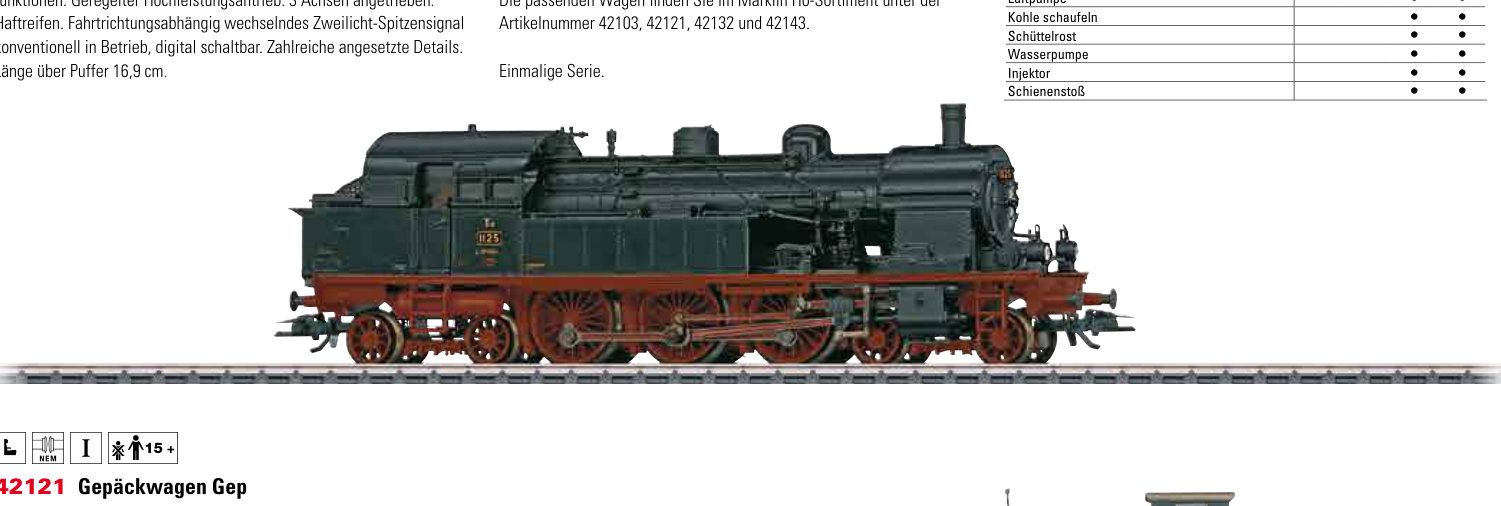
If you still run your layout with an AC controller, you can still buy current digital models. Märklin confirmed this in 2016 in its Technik-Tipp no. 207: all H0 digital locomotives and multiple units from the current range also run in analog mode. A look at the track shows how the decoder recognizes the operating mode: an analog controller supplies an AC voltage whose level sets the speed – the higher the voltage, the faster the locomotive runs; the lower, the slower. A digital central unit, on the other hand, keeps full voltage on the track at all times, as a square-wave AC voltage. The running commands are contained as data packets in the pattern of its rapid polarity changes. If the decoder finds such data packets, it runs digitally, otherwise in analog mode. Nothing needs to be set for this.
| Question | Analog with an AC controller |
|---|---|
| Running and reversing | as with any analog locomotive, direction changed by an overvoltage pulse |
| Headlights | usually switched on from the factory |
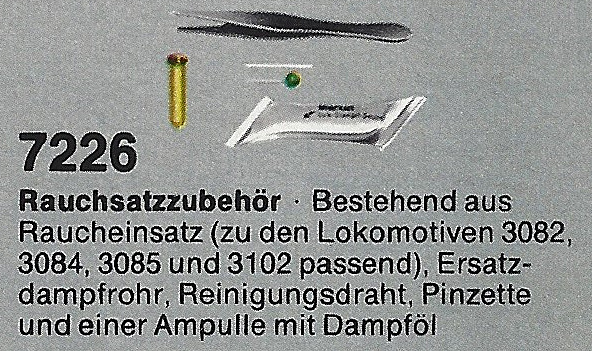
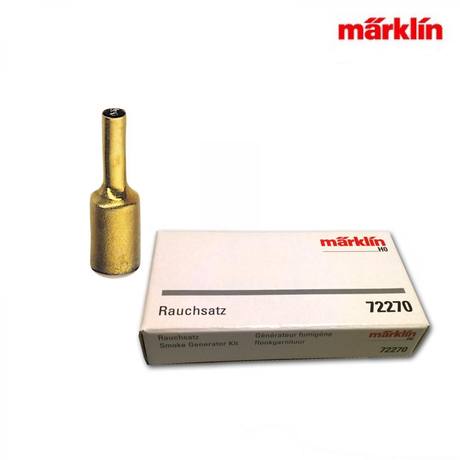
| Smoke generator | a prepared connection is usually active; it needs the same smoke unit as in digital operation (7226 or 72270, depending on the model) |
| Other light functions, e.g. interior lighting | usually switchable only in digital mode; with mfx decoders this can be changed using a Central Station 2 or 3, for example at a model railroad shop |
| Sounds | stay silent in analog operation |
Older controllers such as the 280 A or the 6631 can be used too, although they supply somewhat more voltage than today’s transformers. Current decoders can handle this. If you want today’s safety standard, use a new transformer such as the Transformer 32 VA (66470) anyway.
Be careful with older digital locomotives, roughly from before 2012: some decoders in production locomotives and retrofit kits were less voltage-tolerant. The operating instructions will tell you. If they explicitly require the Transformer 32 VA 6647 or 66470 for analog operation, other controllers are off-limits. If they only say “Märklin AC controller” in general, this restriction does not apply.
Information based on the Märklin catalogs 1927, 1930, 1935, 1936, 1938, 1949, 1953, 1957, 1969, 1972 and 1983/84 to 1989/90, the new items brochures 1990 to 1994 and the price lists in our archive, as well as Märklin Technik-Tipp no. 207 and the Märklin product pages.