A model shows not only a particular locomotive but also a particular period: through the colors, the lettering, the numbers and the railroad company that ran the prototype at the time. So that locomotives, cars, buildings, automobiles and figures on a layout belong together, model railroaders divide railroad history into eras – from Era I to Era VI.
Who defined the eras?
The idea came from the German magazine MIBA (Miniaturbahnen) in 1968. Today the European model railroad association MOROP defines the eras in the European model railroad standards (NEM): the six main eras in NEM 800, and the more detailed sub-periods for each country in separate sheets – for Germany in NEM 806 D. Large manufacturers such as Märklin follow these standards and state the era in the catalog and on the box.
Valid for all gauges
The era depends on the prototype, not on the scale. An Era III locomotive is just as much Era III in Märklin H0 (track gauge 16.5 mm) as in Z gauge (6.5 mm), 1 gauge (45 mm) or as a Trix model for DC. More about the scales: Gauges, transformers and controllers.
The six eras at a glance (Germany)
| Era | Period | What characterizes the period | More |
|---|---|---|---|
| I | 1835–1920 | State railways: each German state with its own locomotives, colors and coats of arms | Era I |
| II | 1920–1950 | Deutsche Reichsbahn: standard locomotives and a common numbering system | Era II |
| III | 1949–1970 | Bundesbahn in the West, Reichsbahn in East Germany; diesel and electric locomotives replace steam | Era III |
| IV | 1965–1990 | Computer numbers, InterCity, ocean blue and beige | Era IV |
| V | 1990–2006 | Deutsche Bahn AG, ICE, traffic red | Era V |
| VI | from 2006/2007 | Many rail operators, twelve-digit European numbers | Era VI |
In neighboring countries the boundaries are sometimes different – in France, for example, Era II does not begin until 1926, and in Italy Era VI not until 2010. All countries with their dates: Railroad eras in Europe.
Why eras overlap
The real railroad never repainted its rolling stock on a single day. New numbers and colors came gradually, usually at the next major overhaul in the shops. That is why some eras overlap: in Germany Era IV begins as early as 1965, while Era III does not end until 1970. In such transition years, vehicles with old and new lettering naturally run side by side in the same train.
Each era is also divided into sub-periods marked with small letters, such as IIIa and IIIb. They help when you want to be very precise – for example, whether a locomotive already carries the DB emblem or still the lettering “Deutsche Bundesbahn”.
One example per era from the Märklin catalogs
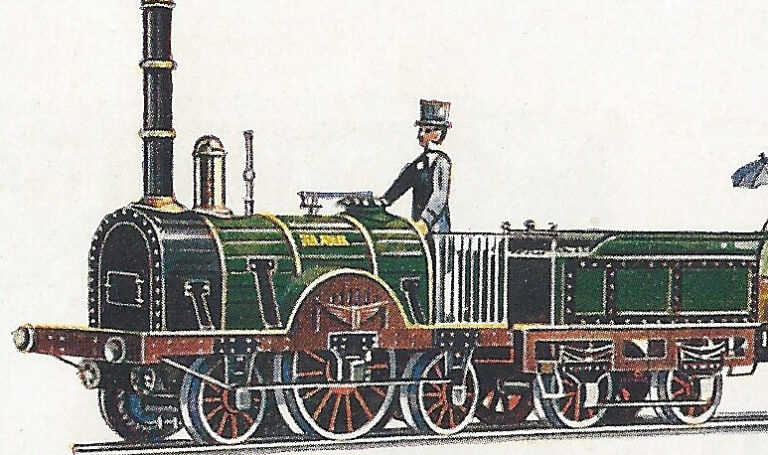
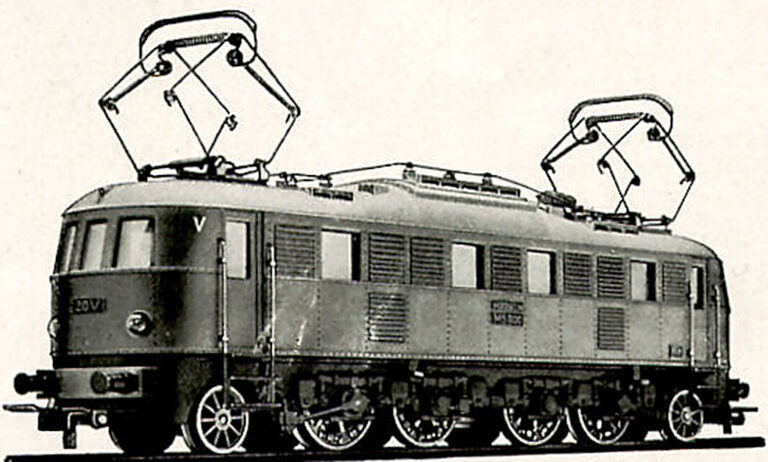
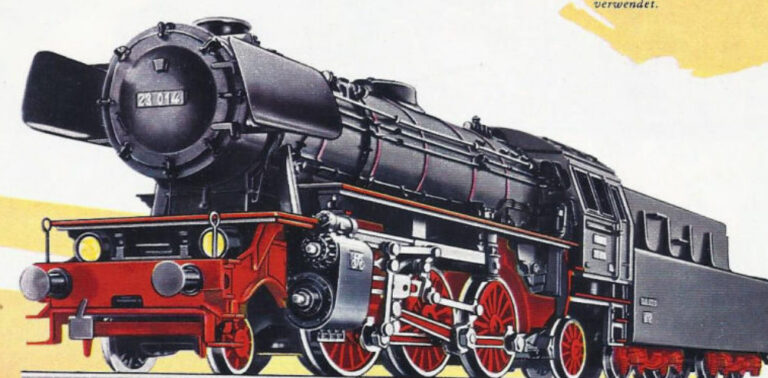
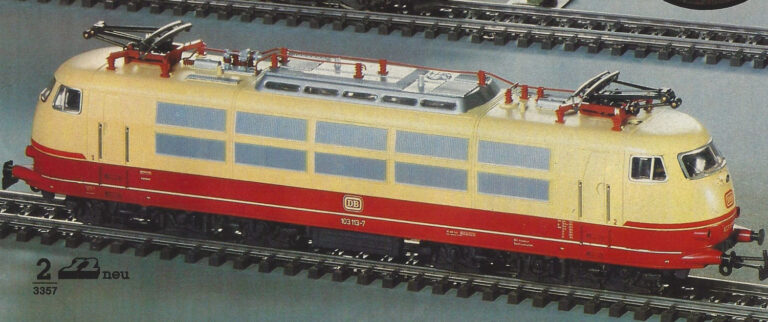
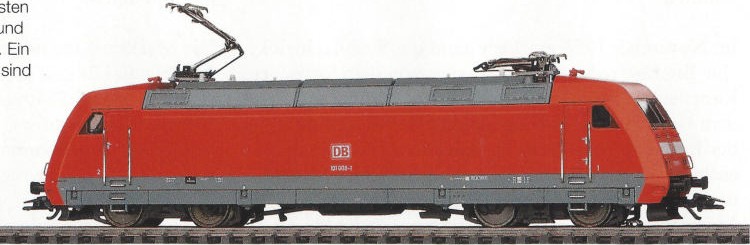
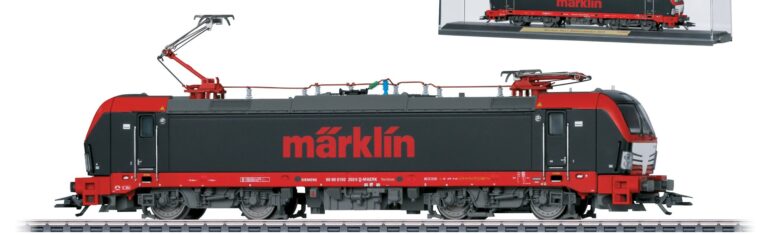
How can I tell the era of my model?
Lettering and number
| Era | Typical lettering |
|---|---|
| I | Name or abbreviation of the state railway, e.g. “K.P.E.V.” or “K.Bay.Sts.B.” |
| II | “Deutsche Reichsbahn”, numbers such as “01 105”; from 1937 with the Reich eagle |
| III | Lettering “Deutsche Bundesbahn” or DB emblem, or “DR”; numbers such as “V 200 001” or “E 10 001” |
| IV | Numbers with a check digit such as “220 001-0” or “103 113-7” |
| V | red DB logo in a rectangle, locomotives in traffic red |
| VI | twelve-digit number on locomotives too, e.g. “91 80 6193 …”, plus the keeper’s abbreviation |
Colors
- Era II: Reichsbahn passenger cars bottle green, express locomotives black and red, electric locomotives gray or green
- Era III: chromium oxide green passenger cars, 1st class with a yellow stripe; electric locomotives blue or green, diesel locomotives old red
- Era IV: InterCity locomotives and cars in ocean blue and beige, mint turquoise for local services, orient red locomotives from 1987
- Era V: traffic red for almost everything, the ICE white with a red stripe
- Era VI: a colorful mix of leased locomotives, advertising locomotives and the colors of regional transit authorities
Information from Märklin
For newer models the era is given in the catalog and on the box. In the price database it is entered in the item profile for many items and can be selected as a filter in the advanced search.
Frequently asked questions
Can I mix eras?
On your own layout, anything goes. If you want to be true to the prototype, stick to one era or one transition period – for example, a V 200 with green cars, but not with an ICE right next to it.
Which era is the most popular?
For many model railroaders it is Era III: steam, diesel and electric locomotives run side by side, the colors are varied, and Märklin has offered a particularly large number of models for it for decades.
Does the classification also apply to Switzerland or Austria?
The six main eras do; the exact dates don’t always. Switzerland and Austria, for example, start Era III as early as 1945. Details: Railroad eras in Europe.